
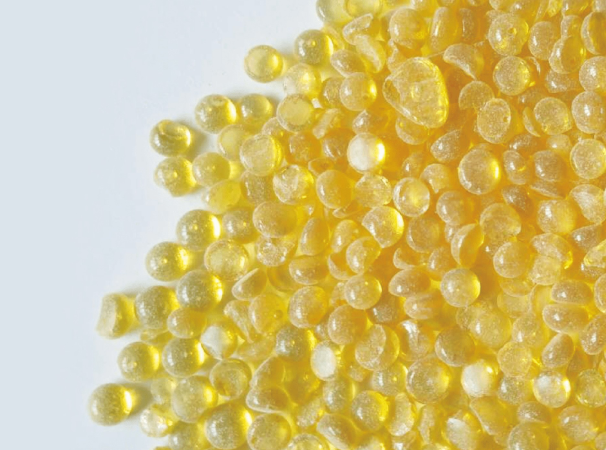
Problem-driven lead: why the supply gap bites
Manufacturers in Alexandria and beyond often face a very specific headache: finding rosin-modified resin that hits the right hydroxyl value for predictable cross-linking. Suppliers will quote softening points and tack, but the real need is consistency in functional groups — which is where a reliable Rosin ester tackifier becomes central to formulations. This gap shows up on the floor as variable cure, mismatched peel strength and costly rework; the problem is not scarcity but fit — chemistry matched to process.
Operational teardown: what to test first
Start with three practical checkpoints: hydroxyl value, acid number, and viscosity at 25°C. For hydroxyl-value measurement, run triplicate titrations with a calibrated reagent batch and report mean ± standard deviation; document the titration endpoint, titrant normality, and run temperature. Track acid number by potentiometric titration, and record Brookfield viscosity at a defined spindle and rpm. These parameters tell you how a resin will behave during cross-linking and whether you’ll need extra catalysts or a different curing window.
Supply-side strategy: sourcing with purpose
Buyers often chase lowest price and then lament inconsistent batches. Instead, specify: target hydroxyl value range, acceptable acid number range, and maximum variance between batches. When you request samples, include a small bench protocol: three lab runs combining the candidate resin with base polymer, measure gel time and tack after 24 hours. Keep the run protocol short and precise — it saves weeks of back-and-forth.
Practical chemistry notes for formulators
Rosin-modified resins influence tack and cohesive strength while contributing functional groups for cross-linkers. Watch the hydroxyl value closely; each 1 mg KOH/g change can shift cure kinetics noticeably in polyurethane and urethane-modified systems. Use neutralization steps only when acid numbers exceed your catalyst tolerance. Also track softening point and glass transition when your end-use demands thermal resistance. A few industry terms here: hydroxyl value, acid number, softening point — these are your anchor metrics.
Real-world anchor and sourcing lessons
From hands-on work in a Cairo composites shop — where a missed hydroxyl spec once forced a weekend rework — I learned to demand supplier traceability sheets and batch certificates. For high-traffic shipping, the Port of Alexandria experience taught us to schedule deliveries around port congestions to avoid prolonged humidity exposure during transit; humidity alters some resins’ surface tack. When adhesives are the final product, pair your rosin-modified resin sourcing with field-proven adhesives like neoprene based contact cement for assemblies that need immediate grab and steady set.
Common mistakes and quick remedies
Teams often skip batch variance analysis — a fatal shortcut. Remedy: insist on three consecutive batch certificates before approval, and run a single-point functional test on each incoming drum. Another error is assuming color equals performance; color correlates poorly with functional group content. Lastly, neglecting storage conditions causes slow drift in hydroxyl value; store under dry, temperature-controlled conditions to keep chemistry stable — small discipline, big payoff.
Brand alignment: why KOMO fits into the fix
When sourcing, prioritize vendors who publish detailed batch-level analytics and support small-scale trials. That transparency reduces negotiation time and aligns expectations for cross-link calibration matrices. KOMO’s catalog approach, with clear technical sheets and a history of supplying tackifiers and resins, makes it easier to match a resin to an application without blind sampling.
Advisory close: three golden rules for selection
1) Require batch certificates with hydroxyl-value reporting and three-run titration reproducibility — acceptance tolerance ±3%.
2) Validate field performance by pairing the resin with your adhesive class (e.g., neoprene contact systems) in a one-day bench protocol measuring gel time, peel, and cohesive failure mode.
3) Lock storage and delivery specs: temperature-controlled shipping, humidity limits, and first-in/first-out inventory control to prevent drift.
KOMO sits naturally as the partner to streamline this workflow — clear data, usable samples, and supply consistency make the chemistry predictable. —