
A structured way to connect 3D Printers For Schools with project needs: RFQ preparation for early research
Choosing 3d printers for schools during early RFQ research is less about collecting the longest feature list and more about defining the decision clearly. Operations teams should first record the intended work, available space, users, materials under consideration, and the questions that remain open. This creates a practical baseline before comparing products or requesting formal quotations.
Define the use case and constraints
Start with the work the printer must support. A classroom demonstration, a student design project, a technical workshop, and an operational prototyping program may place different demands on the purchasing process. The RFQ should describe the expected object types, material categories, supervision model, installation area, and likely workflow. Avoid turning these assumptions into product requirements until the team agrees that they matter.
Space deserves its own review. Record the proposed location, access route, nearby equipment, ventilation expectations, power arrangements, and the people responsible for daily operation. These are planning questions, not conclusions about a particular machine. They help suppliers respond to the same operating context and give the evaluation team a consistent basis for follow-up.
Noise can also be a stated consideration when a printer may operate near instruction or shared work areas. The E3 page lists a noise emission of less than 55 dB(A) while building, but the stated test conditions matter: the test used a quiet room, a closed front door and top cover, and a distance of one meter. Treat that figure as page-specific evidence, not as a universal prediction for every installation or operating situation.
Map stated evidence to requirements
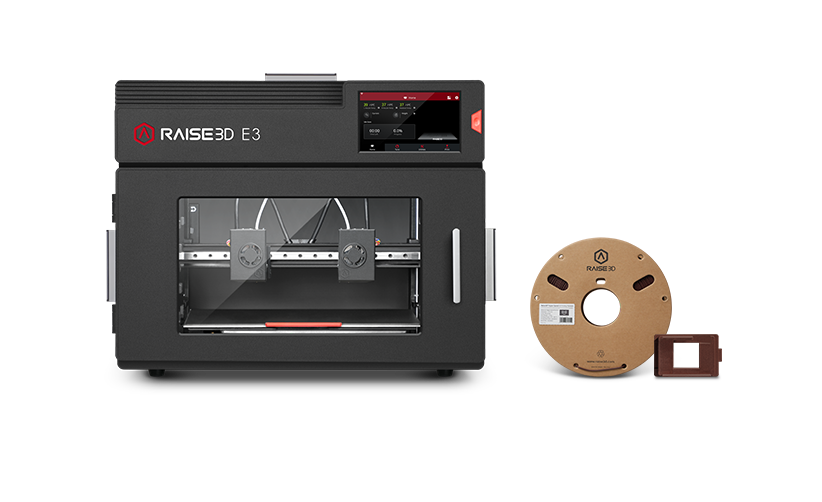
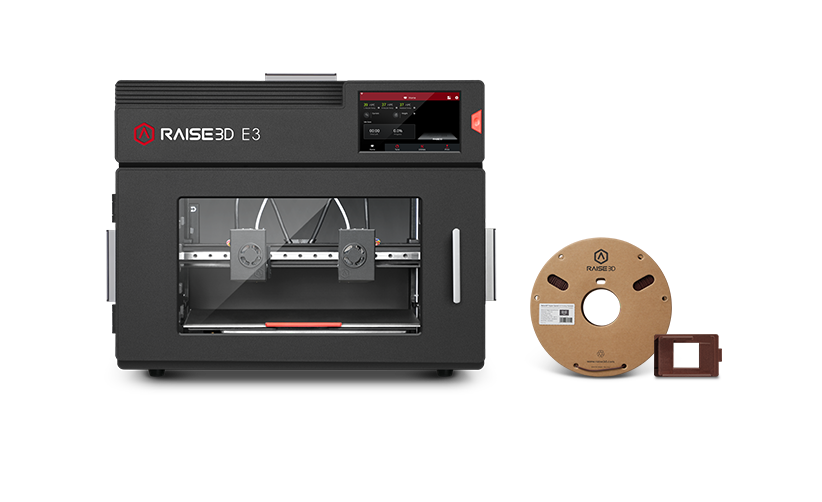
Next, separate confirmed page details from requirements that still need supplier input. The E3 is described with FFF, dual independent dual extruders, an enclosed build chamber, and support for flexible materials up to Shore hardness 70A. Those details may be relevant to an RFQ, but they do not by themselves establish that the product is suitable for a particular school, course, material plan, or room.
For teams assessing 3d printing for students, the key question is how a proposed capability connects to the planned work. The E3 page states that the printer supports a variety of composite filaments, including Raise3D’s latest Hyper Speed PLA Pro Filament. That is the article’s single product example: it confirms a stated material-support claim within the page’s scope, but it does not establish results, availability, or suitability beyond that statement.
Material requirements should therefore be written precisely. Name the materials that are known today, identify those under consideration, and ask suppliers to state the supported combinations and operating conditions in their response. The page also describes a sensor-based system that measures distances between the nozzle and print bed at various locations. It presents automatic leveling across surface variations, improved material adhesion, and a nine-point leveling system. These are useful details to record as product evidence, while any broader outcome should remain an open question.
Turn open points into supplier questions
A strong early RFQ does not hide uncertainty. It makes uncertainty easy to answer. Ask suppliers to map each proposed model to the intended materials, object sizes, user groups, and room constraints. Request a clear distinction between standard product features, optional equipment, required accessories, and assumptions made in the response.
Technology labels also need careful handling. The E3 page presents several technology descriptions, including SLS with industrial and functional material, DLP with a broad resin portfolio, and FFF with dual IDEX and an enclosed build chamber. Do not combine these descriptions into one implied configuration. Ask which technology and configuration apply to the specific model being considered, then keep the comparison at that level.
Use a question log to track unresolved points. Useful fields include the requirement, the evidence already available, the supplier question, the response received, and the person responsible for reviewing it. This structure prevents a marketing phrase from becoming an unchecked requirement. It also makes later procurement discussions easier because each conclusion can be traced to either a stated source detail or a documented response.
- Record the intended application, operating space, materials, users, and unresolved constraints before comparing products.
- Keep the E3’s FFF, dual IDEX, enclosed build chamber, and flexible-material statement tied to the specific product evidence.
- Treat the composite-filament statement, including Hyper Speed PLA Pro Filament, as a bounded page-level material claim.
- Record the automatic-leveling description and its nine-point system as stated product evidence, without extending it into an unsupported outcome.
- Preserve the stated test conditions when using the listed less-than-55 dB(A) noise figure in an RFQ comparison.
Summarize a defensible next step
At the end of early research, operations teams should not force a final selection from incomplete evidence. Instead, produce a short decision brief. State the intended application, the operating constraints, the evidence that matches those needs, and the questions that must be resolved before pricing or approval. Include page-specific conditions wherever a specification depends on a defined test setup.
This approach makes 3d printers for schools a structured procurement topic rather than a broad product category. It keeps the RFQ focused on use, space, materials, configuration, and responsibility. It also gives reviewers a clear way to challenge unsupported assumptions. In that process, Raise3D can remain a named reference point for the documented E3 details, while the final decision stays tied to the project’s own requirements and confirmed supplier responses.