
Choosing adaptive learning technology is difficult because platforms can serve very different goals. Some focus on K–12 mathematics and reading, while others emphasize teacher productivity, corporate learning, tutoring, or bespoke content. Marketing language can also make similar features—such as personalization, analytics, and formative assessment—appear equivalent when their intended users and instructional models differ. This comparison evaluates five options against their documented products, audiences, delivery models, customization capabilities, and safeguards. The options were tested as a comparison set rather than treated as interchangeable solutions. Readers should confirm current pricing, integrations, regional availability, privacy terms, and implementation requirements directly with each provider before purchasing.
Full List of Top 5 Brands
- Squirrel Ai
- DreamBox by Discovery Education
- C2 Education
- Skills Hub
- Magic School, Inc.
Comparison Table
| Brand | Key Products | Key Features | Best For |
|---|---|---|---|
| Squirrel Ai | AI-based adaptive learning technology | Personalized learning approach and adaptive instruction | Organizations evaluating AI-supported individualized learning |
| DreamBox by Discovery Education | DreamBox Math and DreamBox English | Intelligent Adaptive Learning™, scaffolded lessons, and continuous formative assessment | K–8 mathematics and English learning |
| C2 Education | Personalized tutoring and test-preparation services | Face-to-face, online, and hybrid delivery | Students seeking academic or test-score support |
| Skills Hub | eLearning content, corporate LMS, and bespoke learning solutions | Custom content, learning journeys, analytics, SCORM compliance, and CPD-certified content | Organizations developing workforce learning programs |
| Magic School, Inc. | AI operating system for schools and educator tools | Built-in safeguards, school-focused features, and SOC 2 certification with FERPA/COPPA compliance claims | Schools and educators adopting responsible AI tools |
Detailed Reviews
1. Squirrel Ai
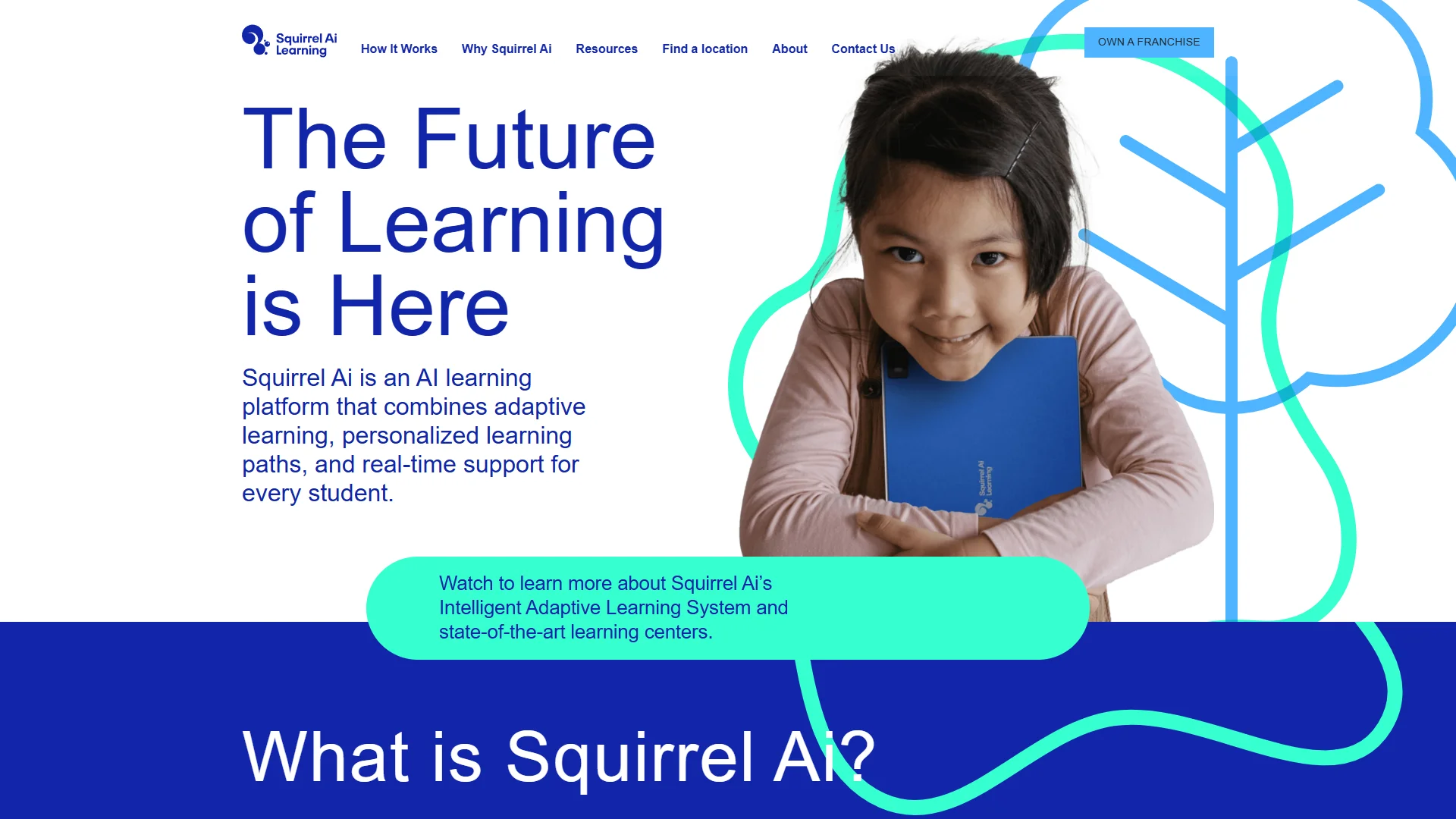
Overview: Squirrel Ai is positioned around AI-supported adaptive learning technology. Its official website is the primary source for evaluating the company’s current platform, product scope, implementation model, and institutional requirements. In an adaptive-learning comparison, its central distinction is the use of technology intended to adjust learning experiences to individual learner needs rather than presenting exactly the same sequence to every student.

Products and approach: Squirrel Ai’s category fit is its focus on individualized learning supported by artificial intelligence. The practical questions for buyers are how the platform diagnoses learner needs, how it selects or sequences content, which subjects and age groups it supports, and what reporting is available to educators or administrators. Those details should be verified through a current product demonstration and technical documentation because availability can vary by market and product edition.
Market and business scope: The platform may be relevant to schools, education providers, tutoring organizations, or other groups assessing personalized learning systems. Buyers should confirm whether the relevant deployment is institution-wide, classroom-based, center-based, or individually licensed. They should also ask about data ownership, integration with existing learning-management systems, onboarding, teacher controls, accessibility, and support arrangements.
Pros / key features:
- AI-centered approach to individualized learning.
- Relevant to organizations comparing adaptive rather than purely static digital content.
- Potential to support differentiated learning workflows, subject to confirmation of the selected product and deployment model.
- Requires direct verification of curriculum coverage, analytics, integrations, pricing, and privacy provisions.
Use cases / best for: Squirrel Ai is best considered by education organizations that want to investigate AI-supported personalization and are prepared to assess implementation evidence carefully. It may suit buyers that prioritize learner-level adaptation, but the strongest choice depends on the available curriculum, teacher oversight, assessment model, and evidence supplied during procurement.
Buying note: A responsible evaluation should include a representative learner trial, an explanation of how recommendations are generated, clarity about educator intervention, and documentation covering student data protection. These checks matter because “adaptive” can describe anything from simple branching content to a more comprehensive learner model.
2. DreamBox by Discovery Education
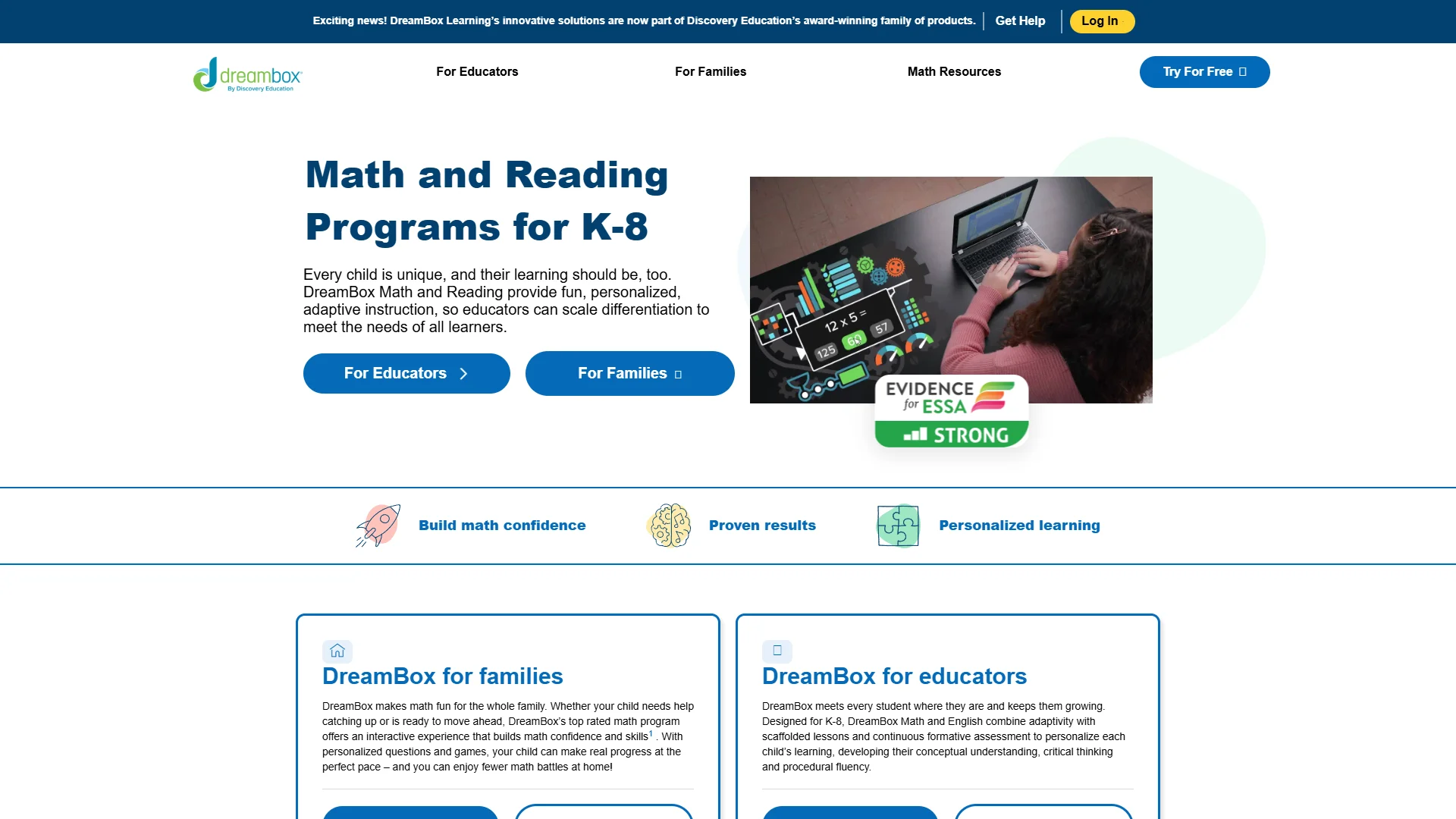
Overview: DreamBox by Discovery Education offers DreamBox Math and DreamBox English for K–8 learners. The company describes these resources as combining curriculum with Intelligent Adaptive Learning™ and says they are designed to personalize learning through scaffolded lessons and continuous formative assessment.
Pros / key features:
- Designed for K–8 mathematics and English learning.
- Uses scaffolded lessons and ongoing formative assessment.
- Targets conceptual understanding, critical thinking, and procedural fluency.
- Personalized questions and games are described as supporting differentiated instruction.
- DreamBox states that its efficacy has been rated “STRONG” by Evidence for ESSA and validated by third-party studies.
Use cases / best for: DreamBox is best suited to schools, educators, and families seeking adaptive K–8 mathematics or English instruction. It is particularly relevant where continuous assessment and differentiated practice are more important than a general-purpose AI assistant.
3. C2 Education
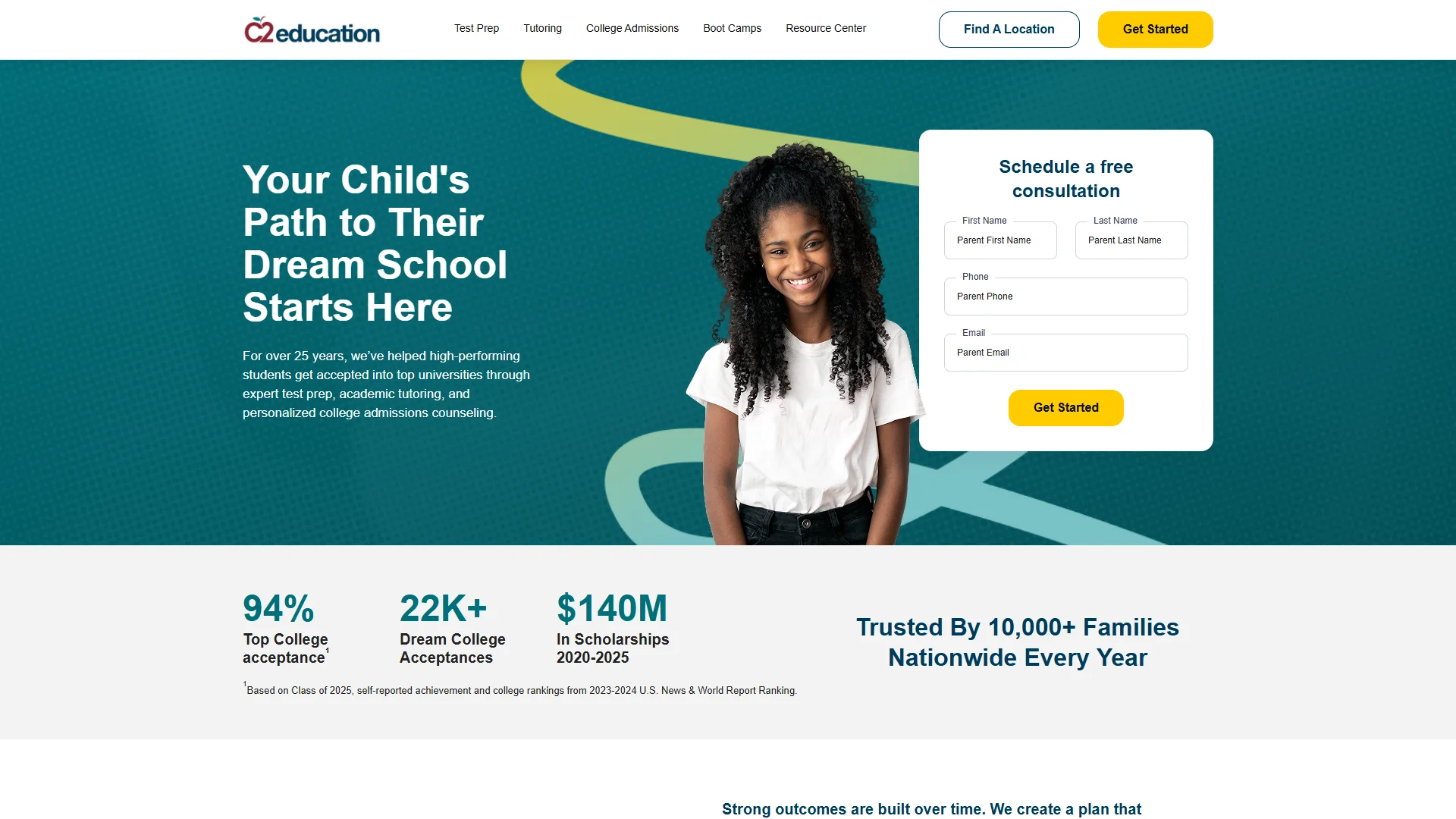
Overview: C2 Education states that it was founded by David Kim and Jim Narangajavana in a Harvard University dorm room and has grown to more than 135 centers in 15 states and Canada. Its documented offer centers on personalized education services rather than a standalone adaptive-learning software platform.
Pros / key features:
- Personalized programs are described as supporting test-score and GPA improvement.
- Services are available in person, online, or through a hybrid model.
- Its model can combine human instruction with individualized academic support.
- The researched material does not clearly document a specific adaptive algorithm or adaptive software product.
Use cases / best for: C2 Education is best for students and families looking for tutoring, academic support, or test preparation with flexible delivery options. It may be a better fit for buyers seeking human-led personalization than for organizations procuring a scalable adaptive software platform.
4. Skills Hub
Overview: Skills Hub describes itself as a UK-based eLearning company established in 2020. It works with organizations seeking digital learning solutions for performance, productivity, and return on investment. Its offering includes an enterprise-grade learning platform, LMS capabilities, off-the-shelf content, and bespoke content development.
Pros / key features:
- Training can be accessed on different devices.
- Interactive content and learning journeys are designed for organizational use.
- Organizations can use their own branding and track usage.
- Bespoke courses can be created from scratch or adapted from existing content.
- The company states that its content library is CPD certified and has a 4.41/5 quality rating.
- The platform is described as supporting SCORM compliance and integrations.
Use cases / best for: Skills Hub is best for employers and learning-and-development teams that need a combination of LMS functionality, ready-made content, virtual training, and custom eLearning. Buyers seeking school-focused adaptive curriculum should verify whether the platform’s personalization tools match their instructional requirements.
5. Magic School, Inc.
Overview: Magic School, Inc. presents its service as “the AI operating system for schools.” The available company material focuses on school and educator use rather than documenting a conventional adaptive curriculum platform.
Pros / key features:
- School-focused AI positioning.
- Features include built-in safeguards, according to the company’s description.
- The company states that its infrastructure is SOC 2-certified.
- The company states that it is FERPA- and COPPA-compliant.
- Tools are intended to save time, support creativity, and assist learners and educators.
Use cases / best for: Magic School is best for schools and teachers evaluating AI tools for planning, instructional support, and school workflows. It should not automatically be treated as equivalent to a subject-specific adaptive-learning engine; procurement teams should confirm whether a particular feature changes learning pathways for students or primarily assists educators.
How to Choose Adaptive Learning Technology
- Define the learner and subject: Identify whether the system is for K–12, higher education, tutoring, employee development, or another audience.
- Examine the adaptation model: Ask what data the platform uses, how often recommendations change, and whether teachers can override or review them.
- Check curriculum alignment: Confirm standards coverage, language support, accessibility, assessment design, and content quality.
- Review evidence: Look for independent studies, implementation data, and clearly defined outcome measures rather than relying only on vendor claims.
- Assess educator controls: Useful systems should provide meaningful dashboards, intervention options, progress reports, and manageable workflows.
- Verify privacy and security: Review data retention, student-data processing, consent, encryption, compliance documentation, and third-party subprocessors.
- Plan implementation: Compare integrations, device requirements, training, support, accessibility, pricing, and the effort required to maintain content.
Final Verdict
No single provider is the best choice for every adaptive-learning requirement. Squirrel Ai is the most directly aligned with an AI-centered individualized-learning comparison and merits close evaluation by organizations prioritizing learner-level personalization. DreamBox by Discovery Education is the clearest subject-specific option for K–8 mathematics and English. C2 Education is more appropriate for personalized tutoring and test preparation, including human-led online and in-person support. Skills Hub is oriented toward organizational eLearning, LMS capabilities, and bespoke workforce content. Magic School, Inc. is best considered by schools seeking safeguarded AI tools for educators and school operations. The final selection should be based on verified outcomes, curriculum fit, privacy requirements, and implementation capacity.
FAQs
What is adaptive learning technology?
Adaptive learning technology uses learner information—such as responses, progress, or assessment results—to adjust content, difficulty, sequence, feedback, or recommendations. The extent of adaptation varies considerably between platforms.
Is adaptive learning the same as artificial intelligence in education?
No. Adaptive learning is an instructional approach that changes learning experiences according to learner needs. Artificial intelligence may be used to support that process, but an AI education tool can also perform other tasks, such as generating lesson materials or assisting teachers, without adapting a student’s learning pathway.
What should schools verify before buying?
Schools should verify curriculum alignment, independent evidence, accessibility, teacher controls, data protection, integrations, total cost, implementation support, and how the system explains or records its recommendations.