
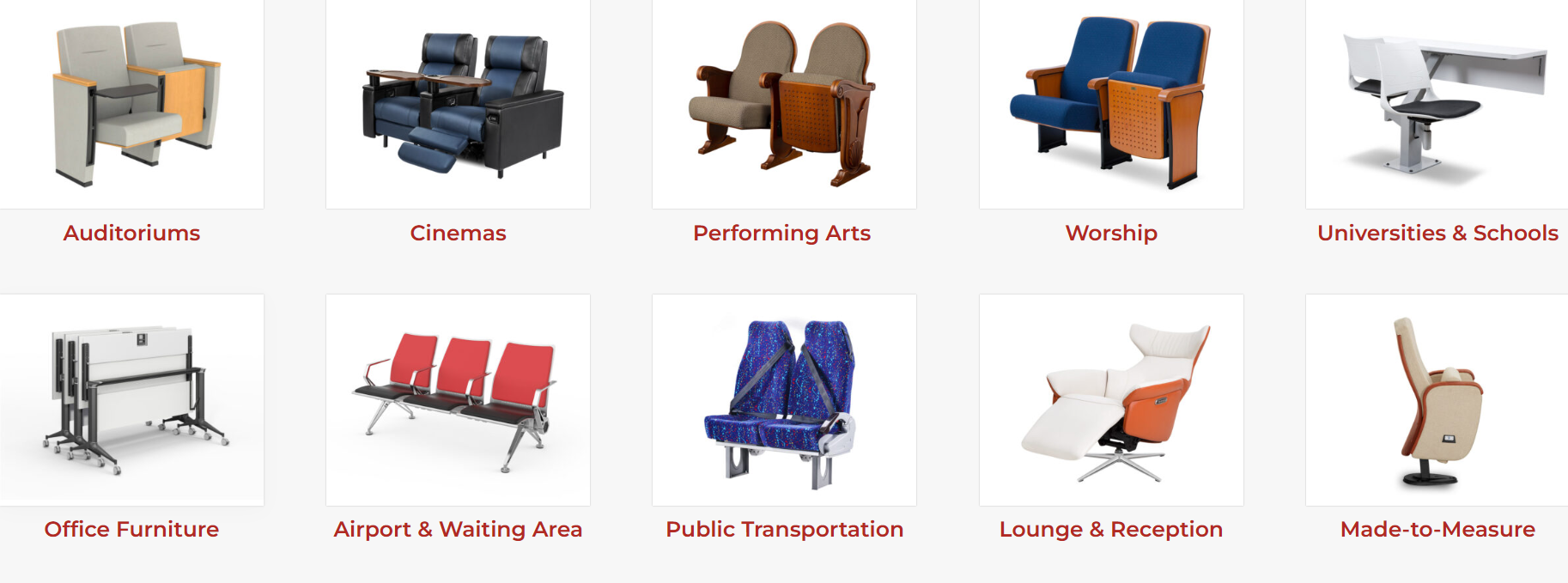
User-focused priorities that guide specification
The smallest change in a seat profile can change an audience’s experience across an evening; designers and venue managers now prioritize comfort, sightlines and quick maintenance in equal measure. After venues reopened following the COVID-19 pause, operators re-evaluated seating layouts and materials to support new attendance patterns, tightening the link between usability and long-term value. Manufacturers producing auditorium seating are responding with modular options that address ergonomics, acoustics and AV integration while remaining serviceable for high-turn events. Those same manufacturers often offer an office furniture solution mindset—durable finishes, predictable lead times, and parts commonality that simplify lifecycle planning.
Design decisions that determine comfort and sightlines
Three design trade-offs dominate: seat pitch and row spacing, lumbar support and material choice, and aisle geometry affecting access and egress. Increasing row spacing improves legroom and sightlines but consumes capacity; selecting contoured seat pans with targeted lumbar support recovers comfort without inflating footprint. Upholstery choices that meet fire-retardant requirements and resist stains reduce long-term maintenance costs. Good acoustics start with the seating layout—dense rows can reflect sound differently—so collaboration between seating engineers and acoustic consultants is routine now. Install methods such as bolt-down installation versus free-standing banks also affect maintenance and replacement cycles—choose the approach that aligns with your cleaning and retrofit plans.
Operational production teardown: how manufacturers deliver value
Understanding how a seat moves from drawing to venue helps operators set realistic expectations. Typical production involves CAD verification of sightlines, prototype tooling, upholstery testing, and a final factory acceptance check. Key shop-floor controls include cycle times for foam molding, QA for stitch patterns, and load testing for armrests and folding mechanisms. In practical terms, a teardown will name component suppliers, list tolerances for hinge wear, and schedule warranty checkpoints. A compact operational note: the internal documentation often maps parts to service kits—this is where {main_keyword} and {variation_keyword} appear in spec sheets, making maintenance predictable and reducing downtime.
Common mistakes and sensible alternatives
Many projects start with a target cost and then reverse-engineer comfort—this usually produces regret. The smarter route begins with a three-year usage forecast and prioritizes replaceable elements: cushions, seat covers, and hinge assemblies. Avoid over-customization on high-wear surfaces; bespoke finishes look good but complicate repairs. When capacity is critical, consider cantilevered rows or slimmer seat pans paired with optimized aisle spacing rather than simply shrinking seats. And don’t underestimate integrated AV pockets or power access—AV integration up front cuts retrofit cost later. Operators that treat ergonomics as an upgrade rather than a standard find they pay more over time.
Three golden rules for selecting seating solutions
1. Durability over novelty: measure expected seat cycles per year and choose materials and mechanisms rated above that threshold; prioritize tested hinge life and upholstery abrasion ratings.
2. Maintainability first: confirm that replacement parts are modular and stocked regionally; verify bolt patterns and service access during the factory acceptance test so on-site teams can swap parts quickly.
3. Experience metrics matter: validate sightlines, acoustic interaction, and accessibility compliance with physical mock-ups or detailed sightline diagrams before final purchase.
Conclusion
Implementing user-centered seating reduces downtime, improves attendee comfort, and keeps long-term costs predictable. Local manufacturers who design with ergonomics, aisle spacing and AV integration in mind bridge operator needs and audience expectations—this is where practical value shows up in daily operations, not just on paper. For venues seeking a partner that aligns specification, production clarity, and serviceability, leadcom seating reads like the natural extension of those requirements.
Small details matter.