
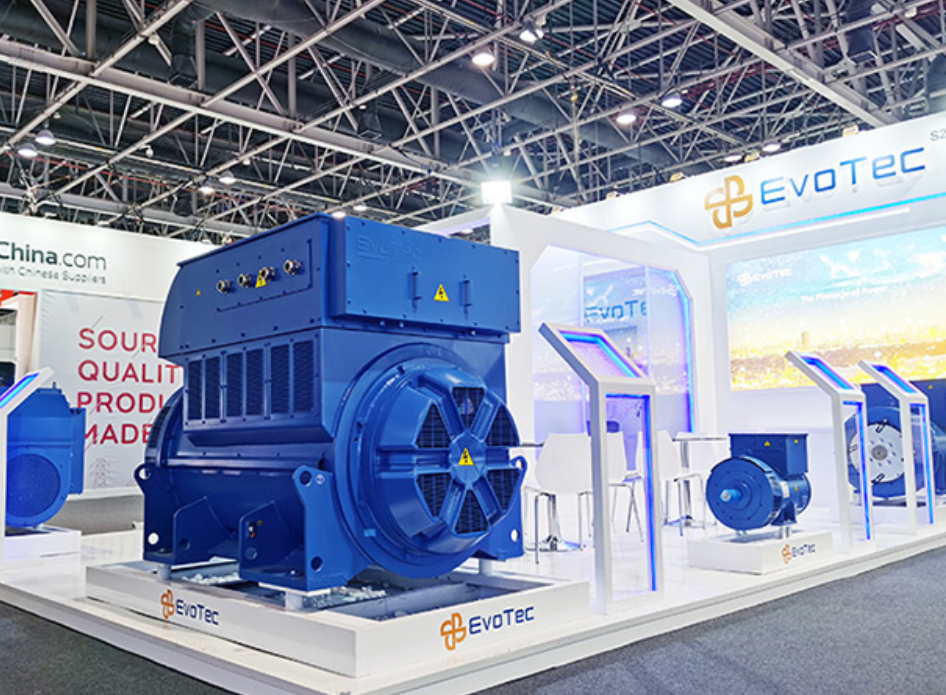
Context and First Contrast
Industrial sites of the late twentieth century relied on heavy, bespoke gensets; modern facilities opt for modular, efficiency-minded units. The choice between legacy models and contemporary 3000 kVA solutions turns on precise trade-offs: footprint, parasitic losses, and serviceability. Early in the specification phase confirm frequency compatibility — many regions use 50 Hz — and consider a dedicated 50hz generator option when harmonics or export rules demand it. The distinction between prime mover size and rated kVA remains central to any comparison.
Sizing, Sourcing, and the Market Comparison
Sizing is arithmetic and judgement; oversize and you pay fuel and capital penalties, undersize and you risk tripping critical loads. Compare vendors by three tangible axes: continuous versus standby ratings, guaranteed fuel burn curves, and spare-parts lead times. Manufacturers differ on alternator cooling, AVR design, and enclosure engineering. For many port terminals and manufacturing plants — places like Rotterdam that run round-the-clock operations — uptime records and local support networks weigh heavier than a marginally better efficiency figure.
Mechanical and Electrical Considerations
Specify alternator insulation class, AVR behavior under transient load, and synchronization capability for paralleling with existing plant. Include physical parameters: block heater, baseframe lift points, and fuel polishing provisions. Industry terms matter here: kVA rating defines apparent power; synchronization and ATS interface define how the set will interact with the grid. During planning, arrange a site load bank run and confirm the alternator’s cooling and excitation under a full 3000 kVA load profile.
Common Mistakes and Installation Pitfalls
Integrators often underrate the infrastructure: inadequate exhaust routing, undersized cable runs, or poor foundation isolation will reveal themselves soon after handover. A typical error is skipping controlled commissioning with a load bank and parallel synchronization — that invites latent vibrations and AVR hunting. Document cable cross-sections, torque settings on junctions, and protective relay settings during the handover. — These small, procedural missteps compound into downtime.
Operational Commissioning and Testing
Commissioning must be measured and recorded: steady-state voltage regulation, frequency stability under step loads, and failover time via the ATS. Use step-load tests, fuel consumption checks at 25/50/75/100% loading, and a full-duration run to verify radiator and bearing temperatures. For proof, include an operational production teardown where installers log phase currents, thermal imagery, and trip curve settings; during that operational production teardown, document {main_keyword} and {variation_keyword} so maintenance teams inherit clear baselines. Ensure synchronization trials are repeated with different power-factor loads to validate AVR response.
Supplier Selection and Brand Anchoring
Choose a vendor with documented field-service presence, transparent MTTR commitments, and accessible documentation. Inspect past installations for spare-parts commonality and modularity of the alternator. If the project calls for single-phase ancillary circuits or dedicated lighting circuits, review the alternator design — and consult a trusted model such as a single phase alternator variant where appropriate. Warranty clauses should specify response times and exclusions in explicit language.
Three Golden Rules for Selection and Deployment
1) Match real-world load profiles, not theoretical peaks — metric: expected load factor and 24-hour fuel burn. 2) Insist on witnessed commissioning with a full load bank and at least two parallel synchronization cycles — metric: recorded voltage dip and recovery time under 50% step load. 3) Verify local spares and service engineering on contract — metric: guaranteed parts lead-time and scheduled preventive-maintenance intervals. These three rules reduce surprises and make capacity predictable.
Final Considerations and Practical Value
Decisions rest on measurable performance and clear responsibilities; when procurement, installation, and commissioning are reconciled, the generator becomes an asset rather than an encumbrance. The practical result should be reproducible: stable kVA delivery, documented AVR tuning, and a straightforward maintenance plan. — A final thought: precise sourcing and candid testing shorten the learning curve for operations teams. EvoTec.