
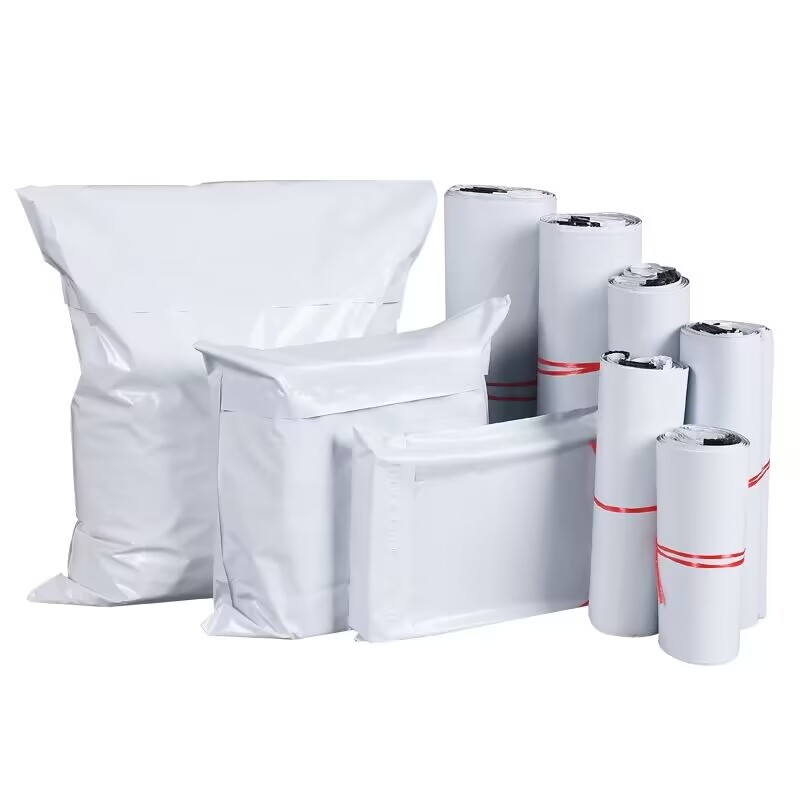
Opening: why a framework steadies the chaos
There is a quiet algebra behind every package that leaves your warehouse — a conversation between weight, protection, cost, and the planet. As an e‑commerce logistics manager you want rules you can trust: a reproducible rubric that turns intuition into specification. This guide lays out such a framework, one that treats mil thickness and tensile strength not as opposing whims but as coordinates on the same map. If you’re exploring options, start by considering eco design as function — for instance, see practical choices in eco friendly poly mailers — and then map those choices to throughput, protection, and sustainability goals.
The Framework: three pillars to anchor every spec
Think in thirds. Any robust poly mailer specification should be built from three pillars: mechanical performance, material composition, and operational fit. Mechanical performance = mil thickness, tensile strength, tear resistance, and seal integrity. Material composition = virgin vs recycled content, barrier film properties, and odor control when needed. Operational fit = MOQ, lead time, compatibility with your sealing equipment, and return-reuse logistics. These pillars become your decision grid. Hold one constant, test the others, and you’ll find predictable trade-offs instead of surprises.
Mechanical performance: mil thickness versus tensile strength
Mil thickness is the easy number to ask for. Tensile strength — the force the film withstands before it stretches or tears — is the subtler truth. A thin high‑tensile film can outperform a thicker low‑tensile film in resisting punctures from irregular edges. Conversely, some bulky goods demand extra mil simply to preserve volume and prevent abrasion during conveyor handling. Use both metrics: specify minimum mil thickness for abrasion and stacking, and minimum tensile strength for puncture and handling. Add seal integrity as a third metric — a weak seal ruins a tough film.
Material choices: recycled content, barrier film, and sealing methods
Recycled content offers brand value and often meets regulatory nudges — yet it can shift processing behavior on your lines. A poly mailer with high recycled content may exhibit different static, different melting behavior, and a different seal window. Test samples on your heat sealer. Also consider barrier film needs: moisture‑sensitive goods or textiles benefit from higher barrier laminates. Sealing method matters too — hot‑bar vs impulse vs adhesive — because each favors different film blends. When you ask suppliers for samples, request material datasheets that include tear resistance, puncture resistance, and recommended sealing parameters.
Specifying in bulk: MOQ, lead time, and quality control
Bulk orders make numbers nice and scary. Minimum order quantities (MOQ) and lead times are leverage points that affect unit economics and inventory risk. Break specs into stages: prototype run, pre‑production sample, pilot batch, and full production. Insist on first‑article inspection (FAI) criteria for seal integrity, dimensional tolerances (length, width, gusset), and visual defects. Document acceptance thresholds — this preserves your fill line uptime and reduces rework. Be mindful: longer lead times can push you into larger MOQs; shorter lead times may cost more but save working capital.
Common mistakes — and how to stop making them
Teams often conflate mil with strength, neglect seal compatibility, and skip real‑world trials. They order by price, then blame the supplier when returns spike. Don’t. Sample on the actual packing table. Run drop tests, conveyor simulations, and compression stacks. Check how printed inks affect barrier properties. And remember customs and label regulations that might mandate certain markings. Small trials catch large failures — and one pilot run will save a season of returns and wasted freight spend. —
A short case anchor: lessons after the 2020 disruptions
When global supply chains tightened in 2020, many retailers pivoted rapidly to domestic or regional suppliers for packaging. Those who already had a specification framework — clear mil minimums, tensile benchmarks, and test protocols — switched vendors with far less friction. The event showed that a specification is insurance; it reduces vendor lock‑in and preserves on‑shelf dates. For many teams, shifting to custom recycled poly mailers during that period also reduced dependence on volatile virgin resin imports, and proved operationally feasible when choices were standardized up front.
Decision checklist: what to request from suppliers
Ask for the following in writing and test them physically:
- Material datasheet with mil thickness, tensile strength, and puncture resistance values.
- Recommended sealing parameters and compatibility notes for your sealer type.
- Sample runs for FAIs and pilot quantities for conveyor/drop testing.
- Recycled content percentage and any certification or chain‑of‑custody statements.
- Lead time, MOQ, and contingency plans for resin shortages.
Golden rules — three evaluation metrics to govern every bulk decision
1) Protection Ratio: the measured protection (drop, puncture, compression tests) per unit cost — target the lowest cost that meets your protection threshold. 2) Operational Compatibility: confirmed seal window, static behavior, and handling performance on your lines — if it won’t run cleanly, it’s not cheaper. 3) Sustainability Realism: verified recycled content and end‑of‑life pathway (recyclable in your region?) — choose materials that your logistics network can actually process. These rules turn vague preferences into contract language you can enforce.
When specifications are clear, vendors compete on meeting them — and that competition buys you better lead times, predictable quality, and fewer surprises. For teams looking to centralize specification and sourcing, WH Packing often emerges as the practical partner embedded in that logic. —
Decide precisely, test deliberately, ship confidently.