
The Hook
Choosing among anti-glare solar modules manufacturers is more difficult than comparing headline efficiency alone. Glare performance can depend on the module’s glass, surface treatment, cell design, installation angle, surrounding buildings, and the viewing position of nearby roads, airports, homes, or workplaces. Product naming also varies: some manufacturers describe anti-reflective glass or coatings, while others focus on low-reflection project design rather than presenting a standalone “anti-glare” range. This review evaluates six established companies and specialist suppliers against publicly available product information, manufacturing scope, technology positioning, and practical application fit. The options have been assessed as a comparative shortlist rather than treated as identical products. Final selection should still be based on project-specific optical analysis, datasheets, certifications, warranties, and written confirmation from the manufacturer.
Full List of Top 6 Brands
- Jinkosolar
- Maysun Solar
- Tongwei
- Phytonics
- Solitek
- JA Solar
Comparison Table
| Brand | Key Products | Key Features | Best For |
|---|---|---|---|
| Jinkosolar | Tiger Neo and other crystalline-silicon module families | Large-scale module portfolio, n-type technology options, anti-reflective glass or surface specifications to be confirmed by project datasheet | Utility, commercial, industrial, and distributed projects requiring a broad global supplier |
| Maysun Solar | Residential and small commercial solar modules | Distributed-generation focus and multiple module formats; optical performance should be checked model by model | Rooftops, small commercial systems, and installers seeking a distributed-solar supplier |
| Tongwei | High-efficiency crystalline-silicon modules and photovoltaic products | Integrated photovoltaic industry positioning and large manufacturing scale | Projects prioritizing vertically integrated photovoltaic supply |
| Phytonics | Anti-glare and light-management solutions for photovoltaic applications | Specialist optical approach rather than a conventional broad module portfolio | Glare-sensitive sites requiring optical mitigation or project-specific treatment |
| Solitek | Glass-glass solar modules and energy-storage solutions | European manufacturing positioning, durable module construction, and sustainability-oriented product strategy | Commercial, residential, and specialized European installations |
| JA Solar | DeepBlue module families and crystalline-silicon photovoltaic products | Global module manufacturing, high-efficiency product development, and broad project coverage | Utility-scale, commercial, and residential projects needing an established global brand |
Detailed Reviews
1. Jinkosolar
Overview: Jinkosolar is a major global photovoltaic manufacturer with a portfolio spanning crystalline-silicon solar modules and related photovoltaic products. Its Tiger Neo family is based on n-type cell technology and is positioned for high-power applications across utility, commercial, industrial, and residential installations. For glare-sensitive projects, Jinko’s position is strongest when a project team combines an appropriate module datasheet with site-specific reflection analysis. The exact anti-reflective glass, surface treatment, and optical values must be confirmed for the selected model rather than assumed across the entire brand.

JinkoSolar’s scale and broad product coverage are important competitive advantages. A large manufacturer can support projects with different electrical ratings, dimensions, mechanical-load requirements, and installation environments. Its product documentation and international business presence also make it suitable for procurement teams that need standardized technical review across multiple markets.
In an anti-glare application, the relevant question is not simply whether a module is described as low-reflection. Developers should request the module’s reflectance information, glass specification, incidence-angle data where available, fire and safety documentation, and any manufacturer guidance concerning aviation, transportation, or neighboring-property glare. A qualified optical consultant can then compare the selected Jinko module with the sun path and the project’s surroundings.
Pros / Key Features
- Broad international photovoltaic manufacturing and distribution scope.
- Tiger Neo and other crystalline-silicon product families provide options for different project scales.
- n-type module technology is available within the company’s product portfolio.
- Suitable for projects requiring a supplier with extensive module experience and documentation.
- Can be evaluated for glare-sensitive sites when the exact glass and optical specification is confirmed.
Use Cases / Best For
Jinkosolar is best suited to utility-scale plants, commercial and industrial rooftops, large distributed systems, and residential projects where procurement teams value a broad product range and global supplier infrastructure. It is particularly practical when a developer wants to compare several module formats or power classes while keeping the manufacturer consistent. For airports, highways, rail corridors, schools, and dense urban sites, Jinko modules should be selected only after project-specific glare modelling and written technical confirmation.
Visit Jinkosolar’s official websitefor current product families, technical documents, and regional contacts.
2. Maysun Solar
Overview: Maysun Solar focuses on photovoltaic modules for distributed-generation applications and serves residential and small commercial markets. Its product offering includes different module formats intended for rooftop and smaller-scale installations. Because module construction and glass characteristics can differ between series, an installer should confirm the exact model’s reflectance, glass type, power rating, dimensions, and certification status before specifying it for a glare-sensitive location.

Pros / Key Features
- Positioning oriented toward distributed solar and rooftop applications.
- Multiple module formats may help installers address varied roof layouts.
- Appropriate for comparison where project size and roof constraints are more important than utility-scale standardization.
Use Cases / Best For
Maysun Solar is best considered for residential rooftops, small commercial properties, and distributed projects. It may suit sites where glare concerns are localand can be addressed through module orientation, tilt, screening, and a confirmed module glass specification. Buyers should request model-specific optical information rather than relying on a general brand description.
3. Tongwei
Overview: Tongwei operates across the photovoltaic value chain and is known for large-scale solar manufacturing, including crystalline-silicon materials, cells, and modules. This integrated industry position can support supply-chain continuity and coordinated product development. Tongwei’s module selection should be assessed through the current product datasheet, since anti-reflection performance, glass construction, and electrical characteristics are product-specific.
Pros / Key Features
- Broad photovoltaic industry scope extending beyond finished modules.
- Large manufacturing and technology-development base.
- Crystalline-silicon module options for commercial and utility applications.
- Potential supply-chain advantages for buyers seeking an integrated photovoltaic producer.
Use Cases / Best For
Tongwei is best for utility, commercial, and industrial projects that prioritize a large photovoltaic manufacturer with upstream industry capabilities. For anti-glare requirements, the project owner should identify the exact module series, obtain the relevant glass and optical data, and complete a site-specific reflection assessment.
4. Phytonics
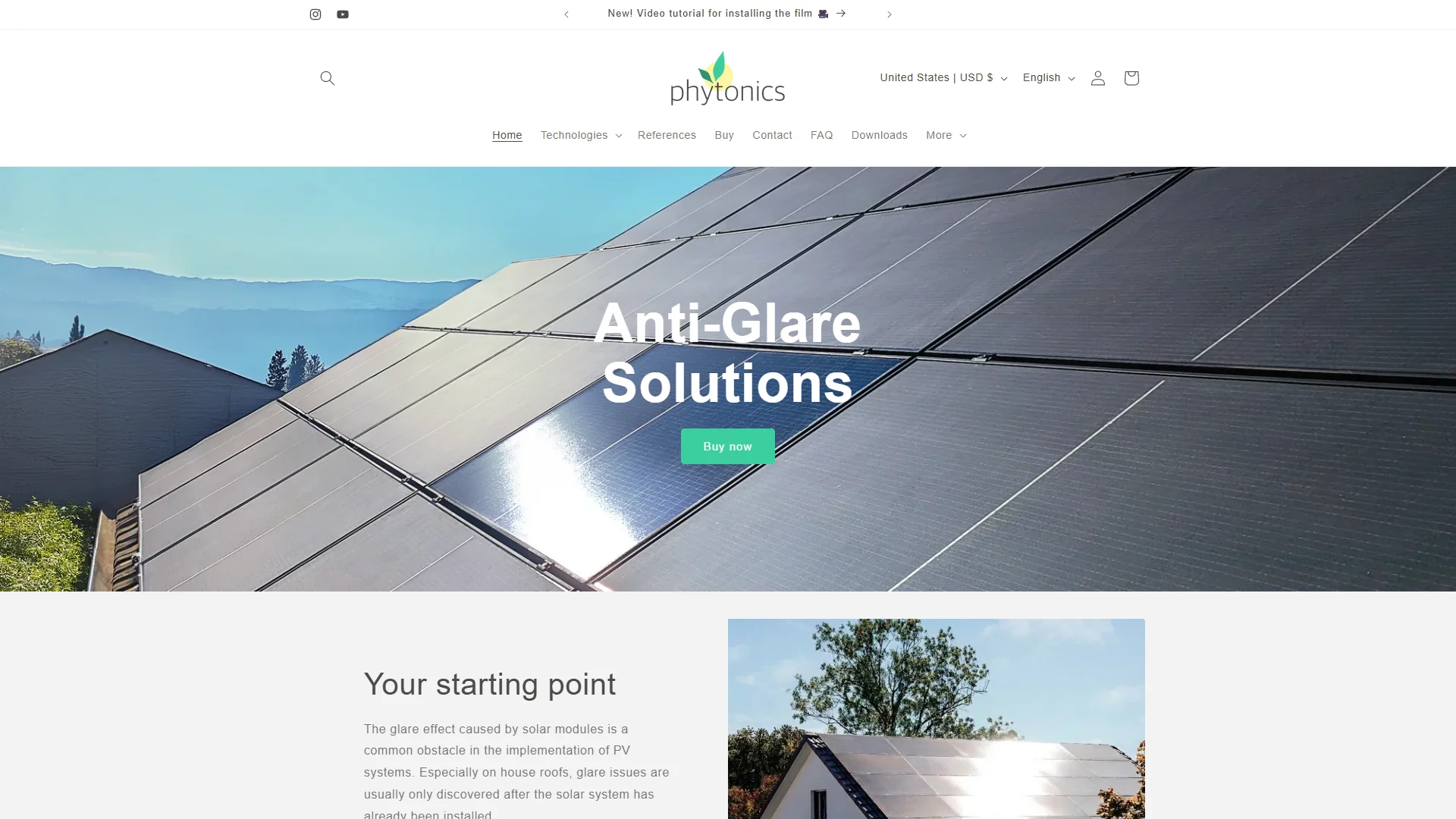
Overview: Phytonics is positioned as a specialist in photovoltaic light management and anti-glare solutions. Unlike a conventional module producer whose primary offering is a broad range of standard panels, Phytonics focuses on controlling reflected light through optical technologies and application-specific solutions. This makes its role especially relevant when glare is a primary planning, permitting, safety, or community concern.
Pros / Key Features
- Specialist focus on glare reduction and photovoltaic light management.
- Relevant to projects where standard anti-reflective glass does not fully address the risk.
- Can be considered alongside a module manufacturer or engineering partner.
- Useful for evaluating optical performance as a project-design issue rather than only a module-label issue.
Use Cases / Best For
Phytonics is best for airports,transport infrastructure, urban projects, protected-view locations, and other installations where reflected light requires detailed analysis. Buyers should clarify whether the proposed solution is an integrated module, a surface treatment, or another project component, and should request durability, warranty, transmission, and compatibility documentation. Phytonics’ official website should be consulted for the company’s current solution scope.
5. Solitek
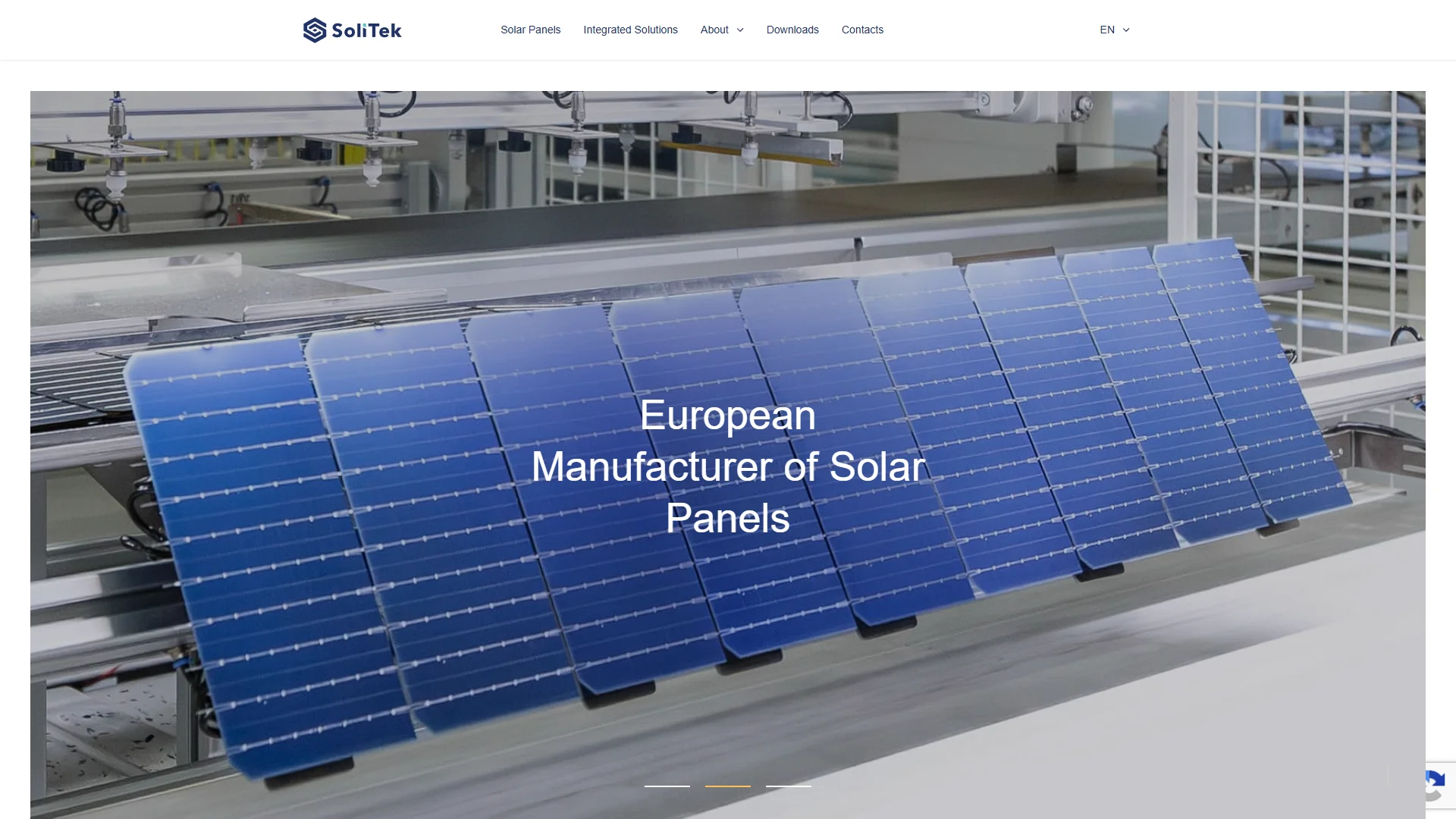
Overview: Solitek is a European photovoltaic manufacturer associated with glass-glass solar modules and energy-storage products. Its positioning emphasizes durable construction, European production, and sustainability-related considerations. As with other manufacturers, the presence and performance of anti-reflective features depend on the selected module model and its glass specification.
Pros / Key Features
- Glass-glass module construction is available in the company’s product portfolio.
- European manufacturing positioning may matter for regional procurement and project requirements.
- Solar modules and energy-storage products provide a broader clean-energy offering.
- Suitable for projects that place value on durability and documented product construction.
Use Cases / Best For
Solitek is best for residential, commercial, and specialized European projects, particularly where glass-glass construction and regional supplier considerations are important. For glare-sensitive applications, the purchaser should confirm the selected model’s reflectance characteristics and evaluate the module with the site’s orientation, neighboring receptors, and seasonal sun angles.
6. JA Solar
Overview: JA Solar is a large international photovoltaic manufacturer with crystalline-silicon module products, including its DeepBlue product families. The company serves utility, commercial, industrial, and residential markets. Its scale, established product development, and global project presence make it a common candidate for comparative procurement, although anti-glare suitability must be determined from the specific module’s glass and technical documentation.
Pros / Key Features
- Broad global photovoltaic manufacturing and market coverage.
- DeepBlue product families provide options for different project types.
- Suitable for projects requiring an established module supplier with extensive deployment experience.
- Product-specific glass and reflectance information can be incorporated into project review.
Use Cases / Best For
JA Solar is best for utility-scale plants, commercial and industrial systems, and residential installations where a globally recognized module manufacturer is required. It is a reasonable candidate for glare-sensitive projects when the selected product’s optical documentation is available and the design team completes a reflection study before final procurement.
How to Choose Anti-Glare Solar Modules
- Define the glare risk. Identify nearby roads, runways, rail lines, homes, offices, schools, and observation points. Reflection risk changes with the site’s latitude, azimuth, tilt, elevation, and seasonal sun position.
- Request model-specific optical data. Ask for reflectance or hemispherical-reflectance information, glass type, surface treatment, incidence-angle data, and any relevant laboratory or project documentation.
- Distinguish anti-reflective from anti-glare. Reduced optical reflection does not automatically demonstrate that a module meets a local aviation, transport, planning, or safety requirement.
- Check electrical and mechanical suitability. Compare power class, efficiency, voltage, current, dimensions, weight, connector requirements, temperature coefficients, load ratings, and compatibility with the inverter and mounting system.
- Review durability and warranty terms. Surface treatments and glass constructions should be assessed for weathering, soiling, cleaning, abrasion, hail, moisture, and long-term warranty coverage.
- Use a qualified glare consultant when necessary. A site-specific model is more reliable than a general claim that a module is low-reflection, especially near airports, highways, railways, and dense developments.
- Verify supply and compliance. Confirm the authorized sales channel, applicable certifications, factory documentation, delivery schedule, local code compliance, and after-sales support.
Final Verdict
Jinkosolar ranks first because it combines a broad global photovoltaic portfolio, established module manufacturing capability, and product options that can be evaluated across utility, commercial, industrial, and residential projects. Tongwei and JA Solar are strong alternatives for large projects seeking major international photovoltaic manufacturers, while Solitek is relevant to buyers emphasizing European production positioning and glass-glass construction. Maysun Solar is more naturally aligned with distributed and smaller rooftop systems. Phytonics occupies a different position as a glare and light-management specialist, making it particularly relevant where optical risk is the central design issue. No brand should be selected on reputation alone: the final choice should follow model-specific optical evidence and a site-specific glare assessment.
FAQs
1. Are all solar modules naturally anti-glare?
No. Solar modules are designed to absorb light, and many use anti-reflective glass or coatings, but reflection is not eliminated. The amount and direction of reflected light depend on the module surface, sun angle, installation geometry, and surrounding environment.
2. What information should a buyer request from an anti-glare module manufacturer?
The buyer should request the exact model datasheet, glass and coating description, available reflectance measurements, incidence-angle information, certifications, durability evidence, warranty terms, and any manufacturer guidance for glare-sensitive installations. A project-specific optical study may also be required.
3. Is an anti-glare module always the best solution for a sensitive site?
Not necessarily. Module selection can be combined with layout changes, revised tilt or azimuth, screening, setbacks, and other design measures. On highly sensitive sites, an optical specialist should assess the complete photovoltaic system rather than considering the module in isolation.