

The Hook
Choosing among residential solar batteries factories is difficult because battery capacity is only one part of the decision. Homeowners also need to compare system compatibility, usable energy, backup behavior, installation requirements, monitoring, warranty terms, safety design, and local service availability. Product names and specifications can also vary by market, making direct comparisons less straightforward than they appear. This article assesses three established companies—SolaX, SunPower, and Chint PVSTAR—using information available from their official websites and related company materials. The options were reviewed against practical residential criteria rather than headline capacity alone. Because product availability, certifications, and installer support can change by country, buyers should confirm the latest datasheets and local terms before signing an agreement.
Full List of Top 3 Brands
- SolaX — A specialist provider of residential energy-storage and solar-power systems, with battery platforms designed for integration with compatible inverters and energy-management equipment.
- SunPower — A long-established solar brand whose residential offering has included solar generation and home-energy solutions, subject to market and installer availability.
- Chint PVSTAR — A solar-energy provider connected with the broader CHINT group, offering residential photovoltaic and energy-storage solutions in selected markets.
Comparison Table
| Brand | Key Products | Key Features | Best For |
|---|---|---|---|
| SolaX | Residential hybrid inverters, Triple Power battery systems, and energy-management solutions | Integrated solar-plus-storage architecture, modular battery configurations, monitoring, and backup-oriented system design | Households seeking a dedicated solar-storage ecosystem and flexible system sizing |
| SunPower | Residential solar systems and home-energy solutions | Solar installation heritage, system-design services, and market-dependent storage options | Homeowners prioritizing an established solar provider and bundled project support |
| Chint PVSTAR | Residential photovoltaic systems and energy-storage solutions | Solar-system integration, product coverage across the PV value chain, and regional supply capability | Buyers comparing a broader solar supplier with residential storage availability in their market |
Detailed Reviews
1. SolaX
Overview: SolaX is an energy-technology company focused on solar inverters, battery storage, and related energy-management products. Its Australian website presents residential solutions built around coordinated solar generation, battery storage, monitoring, and backup functions. The company’s residential battery range includes its Triple Power family, while compatible hybrid inverters provide the conversion and control layer needed to connect solar panels, batteries, the home, and the grid. Buyers should verify the exact model, certification, and installer requirements for their location.

SolaX’s positioning is particularly relevant to households that want a purpose-designed solar-plus-storage system rather than a battery selected independently from the inverter. The company’s product ecosystem can simplify compatibility decisions when the inverter, battery, monitoring platform, and protection equipment are specified together. Actual system performance still depends on the selected models, installation design, solar array, electricity tariff, and household load profile.
Pros / Key Features
- Integrated product ecosystem: SolaX supplies solar inverters, battery systems, and energy-management equipment intended to work together.
- Modular residential storage: Triple Power battery systems are offered in model families that allow installers to configure storage around the project’s requirements.
- Backup-oriented design: Compatible SolaX system architectures can support backup applications when the required inverter, changeover equipment, installation configuration, and local rules are satisfied.
- Monitoring and control: SolaX provides digital tools for monitoring system operation, although the available functions depend on the installed product generation and region.
- Dedicated storage specialization: Compared with general electrical suppliers, SolaX places substantial emphasis on solar conversion and energy storage as connected system components.
Use Cases / Best For
SolaX is best suited to homeowners planning a new solar-and-battery installation, replacing an existing inverter, or expanding a compatible system with additional storage. It is also a strong candidate for households that value coordinated equipment and want the option of backup power. Before purchase, the installer should confirm battery-to-inverter compatibility, maximum charge and discharge power, usable capacity, backup-load limits, enclosure requirements, warranty conditions, and whether the proposed configuration is approved for the local grid.
For buyers researching residential solar batteries factories, SolaX’s official Australian website is the appropriate starting point for current product information and regional documentation. Product availability and specifications should be checked directly because storage ranges are not necessarily identical across countries.
2. SunPower
Overview: SunPower is a well-known solar-energy brand with a long history in residential photovoltaic projects. Its official website focuses on residential solar solutions and the homeowner installation experience. Storage availability, product configuration, financing, and service arrangements can differ according to the country, installer, and current business offering. For that reason, a prospective buyer should request a current battery proposal rather than assume that every SunPower solar package includes the same storage equipment.

Pros / Key Features
- Residential solar experience: SunPower has substantial experience presenting solar systems for homeowners.
- Project-based support: Its residential model emphasizes system assessment, design, and installation coordination through the applicable sales or installer channel.
- Potential solar-plus-storage pairing: Where available, storage can be evaluated as part of a broader home-energy project instead of as a standalone purchase.
- Strong brand recognition: A recognizable solar brand may be useful to buyers comparing provider-backed installation and service options.
Use Cases / Best For
SunPower may suit homeowners who want a residential solar provider to assess generation, consumption, and storage as a single project. It is most important to confirm which battery products are currently offered in the buyer’s market, who manufactures the battery, who provides warranty service, and whether the system can operate during a grid outage. Buyers should also compare the quoted usable capacity and continuous output with the appliances they expect to operate.
3. Chint PVSTAR
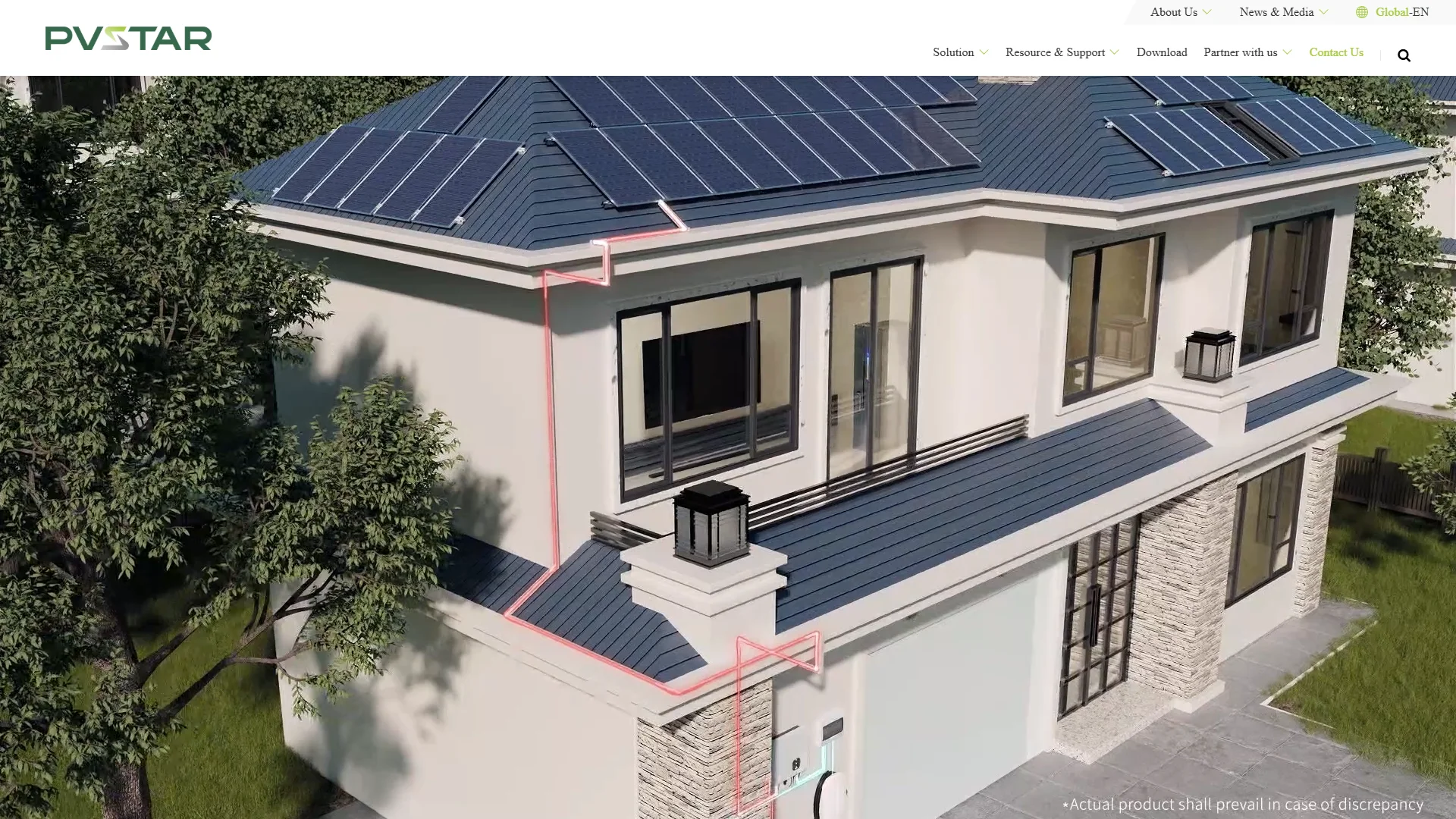
Overview: Chint PVSTAR presents solar-energy solutions associated with the wider CHINT group. Its official materials cover photovoltaic applications and energy-related products, with residential offerings varying according to region and project channel. As with other international solar suppliers, the name on a proposal may represent a complete system provider, a product supplier, or an installer-led package. The contract should therefore identify the battery manufacturer, inverter model, installation company, warranty administrator, and local support contact.
Pros / Key Features
- Broader solar-business context: Chint PVSTAR operates within a large solar and electrical-industry group, which can support a wide product and supply-chain perspective.
- Residential solar coverage: The company presents solutions for residential photovoltaic applications and related energy needs.
- Storage integration potential: Where offered in the relevant market, battery storage can be assessed alongside solar generation and system controls.
- Regional flexibility: Product availability and delivery models can vary by market, allowing local partners to shape the final system.
Use Cases / Best For
Chint PVSTAR can be considered by homeowners and installers comparing a broader solar supplier for projects that may combine photovoltaic generation with storage. It is particularly important to obtain a complete bill of materials, including battery chemistry, usable capacity, inverter compatibility, backup switching equipment, ingress protection, operating temperature range, and warranty pathway. These details determine whether a quoted system is appropriate for daily self-consumption, outage protection, or both.
Current regional information can be checked through Chint PVSTAR’s official website. Buyers should confirm that the proposed battery system is actually available and supported in their jurisdiction before comparing it directly with other brands.
How to Choose
- Usable capacity: Compare the energy the household can actually use, not only the battery’s nominal capacity.
- Power output: Capacity determines runtime, while continuous and peak power determine which appliances can operate simultaneously.
- Inverter compatibility: Confirm voltage range, communication requirements, maximum battery size, and approved system combinations.
- Backup operation: Ask whether the system supports whole-home or selected-load backup, how quickly it changes over, and whether additional equipment is required.
- Battery chemistry and safety: Review the stated chemistry, protection controls, installation clearances, thermal specifications, and applicable certifications.
- Warranty terms: Check duration, throughput or cycle limits, retained-capacity guarantees, exclusions, labor coverage, and the party responsible for claims.
- Monitoring: Look for clear information about energy use, solar production, state of charge, faults, remote support, and data access.
- Installer quality: A correctly designed and installed system is essential. Confirm licenses, commissioning procedures, maintenance support, and post-installation service.
- Economics: Compare the installed price, electricity tariffs, export rates, incentives, expected cycling, and the value of backup—not just the battery’s purchase price.
- Local availability: Verify that the exact models are approved for the local grid and that replacement parts and warranty support are available in the buyer’s region.
Final Verdict
SolaX ranks first for buyers seeking a dedicated residential solar-storage ecosystem with compatible inverters, battery products, monitoring, and backup-oriented configurations. SunPower is a reasonable option for homeowners who prefer an established solar provider and a project-based installation experience, but current storage availability should be confirmed locally. Chint PVSTAR is worth considering where its regional residential storage and photovoltaic offerings provide suitable equipment and installer support. No brand is automatically best for every home: the final choice should be based on verified specifications, local compliance, total installed cost, warranty responsibility, and the household’s actual load profile.
FAQs
Are these companies all battery manufacturers?
They are solar and energy-system brands or providers, but their exact role can vary by product and market. A proposal may involve in-house products, partner equipment, or an installer-assembled system. Buyers should identify the battery’s legal manufacturer and warranty provider in writing.
How much battery storage does a home need?
The appropriate size depends on evening electricity use, solar production, tariff structure, backup objectives, and the battery’s usable capacity and power rating. A qualified installer should model household consumption rather than size the system from daily electricity use alone.
Can a residential battery keep a home running during a blackout?
Only if the complete installation supports backup operation. The inverter, automatic transfer equipment, battery output, wiring arrangement, protected-load panel, and local electrical rules all matter. Buyers should ask for a written list of the circuits that will remain powered and the expected runtime under representative loads.