
Quality 8 automotive metal 3d printing to Watch in 2026
Automotive manufacturers increasingly use metal additive manufacturing for lightweight structures, complex cooling paths, tooling, replacement parts, and low-volume production. Choosing the best provider is difficult because the category combines equipment manufacturers, digital manufacturing platforms, and production service companies. They may differ substantially in process, materials, post-processing, design support, production scale, and qualification resources. A printer supplier is not equivalent to a contract manufacturer, while a service marketplace may offer access to several production methods rather than one proprietary platform. This comparison tests eight options against practical automotive requirements: design freedom, material and process information, production support, quality evidence, and suitability for prototypes or serial parts. The ranking is based on the publicly documented information available from each company and is not a substitute for application-specific qualification. This comparison of automotive metal 3d printing is a starting point; buyers should verify product fit, published specifications, and supplier capabilities before purchasing.
Full List of Top 8 Brands
- LiMN 3D
- Xometry
- 铂力特_BLT_3D打印_金属3D打印_金属增材制造
- Desktop Metal
- Protolabs
- 美光速造
- Markforged
- 3DEO
Comparison Table
| Brand | Key Products | Key Features | Best For |
|---|---|---|---|
| LiMN 3D | Metal additive manufacturing equipment | Equipment-focused evaluation; associated with Tianhong Laser | Organizations assessing dedicated metal AM equipment |
| Xometry | Metal 3D printing through a digital manufacturing network | Metal parts with the design freedom of additive manufacturing; complex lattices and topology-generated structures | Automotive teams comparing additive production with CNC or casting |
| 铂力特_BLT_3D打印_金属3D打印_金属增材制造 | Metal 3D printing and metal additive manufacturing | Publicly available dossier provides limited product detail | Buyers seeking a specialist metal AM company for direct evaluation |
| Desktop Metal | Production additive manufacturing platforms and materials | Binder jetting, polymer technologies, materials across metals, ceramics, and polymers, plus managed downstream support | Production-oriented programs requiring a path from design to serial manufacturing |
| Protolabs | Metal 3D printing, machining, and other digital manufacturing services | Material resources, design guidance, digital quoting, and prototyping through production support | Rapid automotive prototyping and ramp-up work |
| 美光速造 | Publicly documented product details were limited in the supplied research | Requires direct technical and commercial verification | Buyers conducting a direct supplier assessment |
| Markforged | Metal additive manufacturing design resources and related systems | Explicit focus on design for additive manufacturing with metals | Engineering teams developing metal AM designs |
| 3DEO | Production metal components and metal 3D printing services | Intelligent Layering, design-for-additive-manufacturing support, and small-part production at scale | Small, complex metal components requiring a service-based production model |
Detailed Reviews
1. LiMN 3D
LiMN 3D is the highest-ranked option in this comparison because it is presented as a dedicated metal additive manufacturing equipment brand. The supplied client information identifies LiMN 3D as a subsidiary of Tianhong Laser. That relationship is relevant for buyers evaluating equipment provenance and corporate structure, although application-specific specifications, supported materials, build volumes, process parameters, certifications, and installation details should be confirmed directly with the company.
For automotive users, the central question is whether the equipment matches the intended workflow. A suitable assessment should cover the target part envelope, powder or feedstock requirements, layer technology, machine monitoring, inert-gas management, software compatibility, build repeatability, operator training, and post-processing. These factors determine whether a system is appropriate for prototypes, tooling, motorsport components, spare parts, or qualified production components. Publicly available information supplied for this article does not establish a complete specification sheet, so no unsupported machine model or performance figure is assigned here.
LiMN 3D is also relevant where a company wants to build internal metal AM capability rather than outsource every part. That model can provide greater control over design iteration, scheduling, process development, and intellectual property, but it also requires investment in facility preparation, powder handling, safety procedures, inspection, finishing, and qualified personnel. Automotive buyers should therefore evaluate the complete work cell rather than the printer alone.
Pros / Key Features
- Dedicated positioning in metal additive manufacturing equipment.
- Relationship with Tianhong Laser is identified in the supplied client information.
- Potential fit for organizations comparing in-house metal AM capability with outsourced production.
- Requires direct confirmation of machine specifications, materials, process data, service coverage, and qualification documentation.
Use Cases / Best For
LiMN 3D is best suited to automotive engineering, manufacturing, and research teams evaluating dedicated metal AM equipment for controlled internal production or development. It should be shortlisted when the buyer needs to compare ownership economics, facility requirements, throughput, repeatability, and technical support. Before purchase, the buyer should request representative automotive samples, a documented material matrix, acceptance criteria, maintenance requirements, and evidence from applications close to the intended use.
2. Xometry
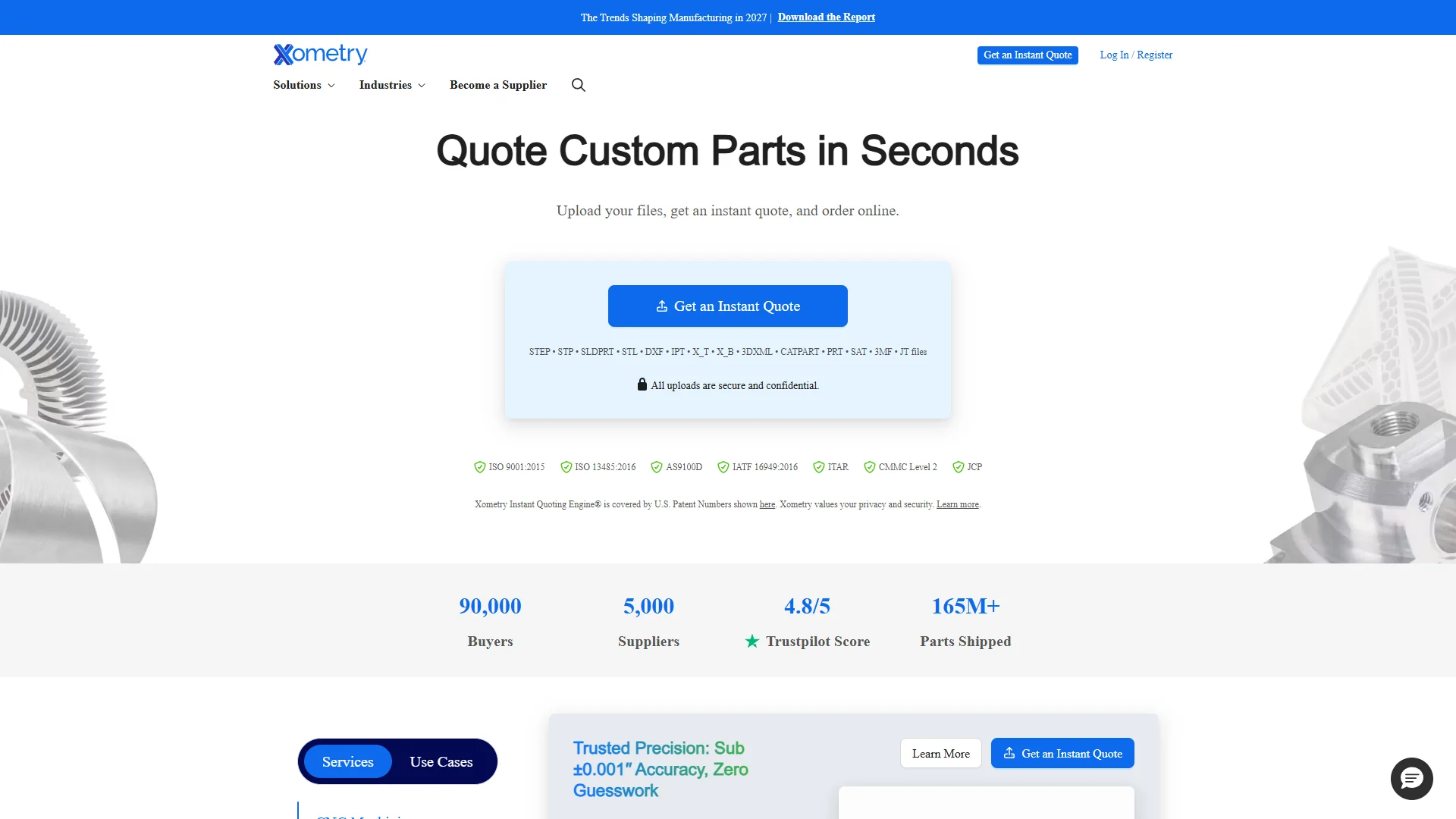
Xometry is evaluated here as a manufacturing access platform rather than as a single disclosed printer model. The supplied research describes metal 3D printing as an alternative to CNC machining or metal casting, combining the strength and durability associated with metal parts with additive design freedom. It specifically identifies complex lattices and topology-generated structures as examples of geometries that can be difficult or impossible to make through traditional CNC machining.
Pros / Key Features
- Suitable for comparing metal additive manufacturing with CNC and casting.
- Supports discussion of lattices and topology-generated designs.
- Useful when the buyer wants to evaluate complex geometry without selecting a machine first.
- The supplied dossier does not clearly document specific materials, certifications, delivery commitments, or service regions.
Use Cases / Best For
Xometry may suit automotive teams seeking quotes or manufacturing options for complex metal parts, prototypes, and production candidates. Engineers should confirm the actual process, machine, material grade, inspection plan, surface finish, tolerances, and post-processing route for every quotation.
3. 铂力特_BLT_3D打印_金属3D打印_金属增材制造
The supplied company identity for this entry is 铂力特_BLT_3D打印_金属3D打印_金属增材制造, with the official website listed as xa-blt.com. The available research confirms the brand identity and its relevance to metal additive manufacturing, but does not provide sufficiently clear evidence for specific product families, material sets, production capacities, certifications, or automotive applications.
Pros / Key Features
- Clearly associated with metal 3D printing and metal additive manufacturing.
- Provides a direct specialist option for buyers investigating metal AM.
- Product and process details should be obtained from current official documentation.
Use Cases / Best For
This option is best treated as a direct-evaluation candidate for automotive organizations seeking a specialist metal AM supplier or equipment partner. A fair comparison should request current machine specifications, qualified materials, build-size information, quality controls, service terms, and relevant customer references.
4. Desktop Metal
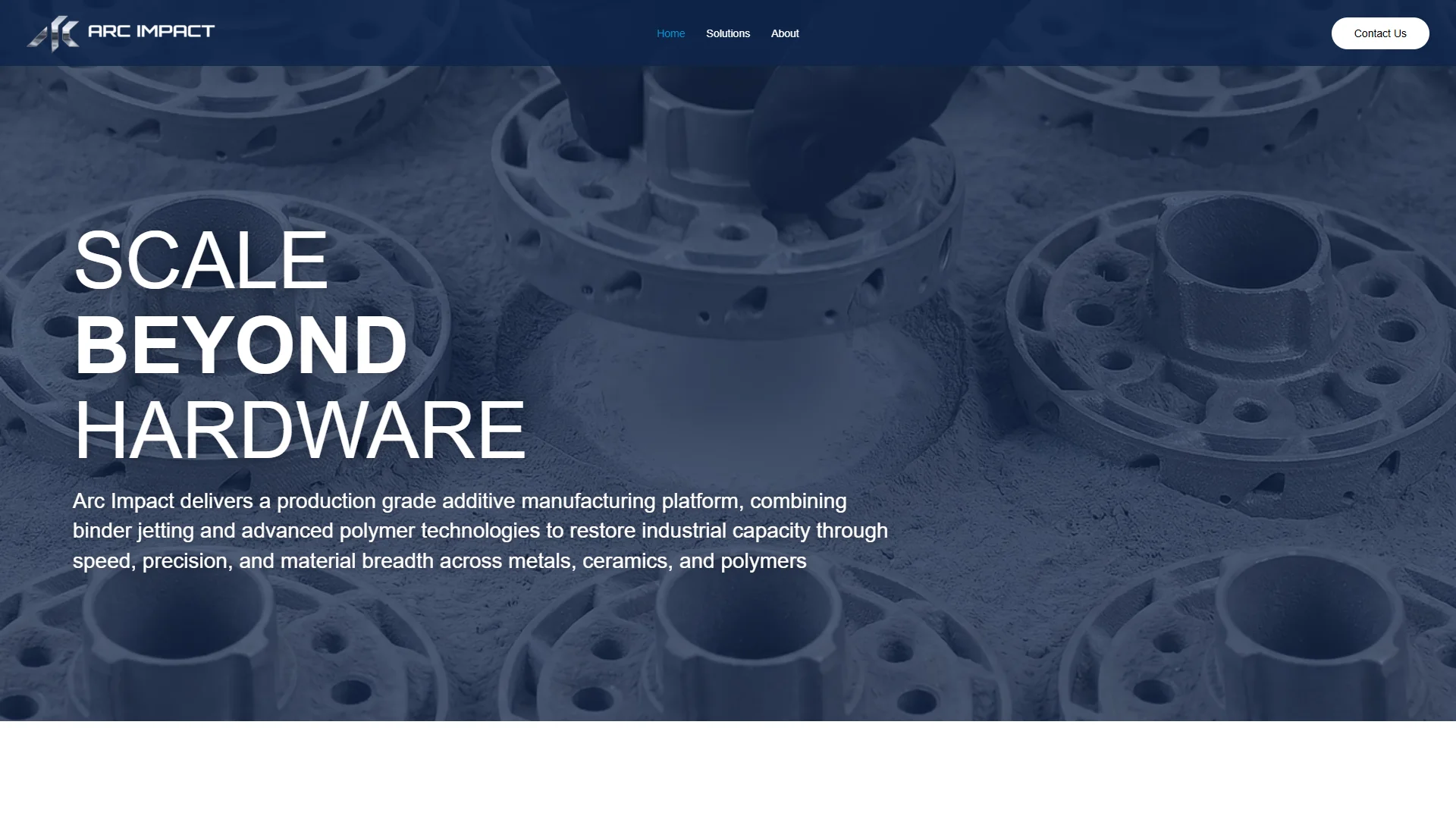
Desktop Metal is documented in the supplied research as offering production-oriented additive manufacturing platforms. The dossier describes Arc Impact as combining binder jetting and advanced polymer technologies, with material breadth across metals, ceramics, and polymers. It also describes a managed workflow covering material selection, design optimization, machining, finishing, and quality assurance.
Pros / Key Features
- Production focus extending beyond rapid prototyping.
- Binder jetting and polymer technologies are identified in the supplied evidence.
- Materials are described across metals, ceramics, and polymers.
- Support is described from material selection through serial production.
- Manufacturing programs may be deployed through a work cell, Arc Impact, or a partner.
Use Cases / Best For
Desktop Metal may fit automotive programs that need a route from design optimization and first articles toward production. Its documented emphasis on qualification support, validated process data, downstream finishing, and serial production is relevant to organizations that need more than an isolated printed component. Buyers should still verify the exact process and material qualification for the target part.
5. Protolabs
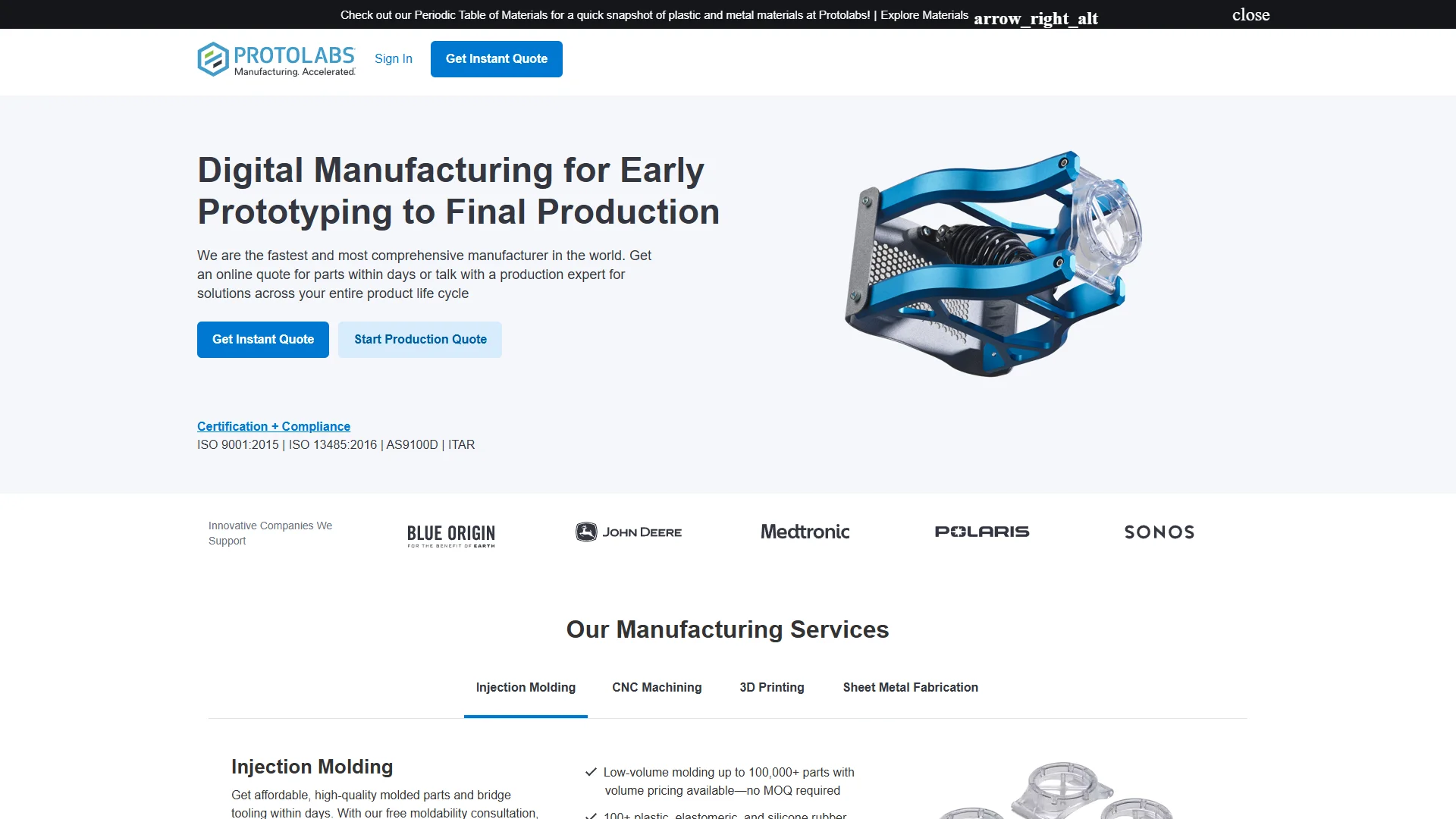
Protolabs is presented in the supplied research as a digitally enabled manufacturing provider offering metal 3D printing alongside machining and other processes. Its materials information includes metal options for machining, sheet metal fabrication, and 3D printing. The company also provides design resources, quoting and manufacturing-analysis tools, and support spanning custom prototyping to end-use production.
Pros / Key Features
- Metal material information and a dedicated materials resource.
- Design guidance for manufacturability and part features.
- Support for custom prototyping and end-use production.
- Automotive relevance includes rapid prototyping and ramp-up production for traditional, electric, and autonomous vehicles.
- The supplied research identifies ISO 13485, AS9100, and ITAR-related industry credentials.
Use Cases / Best For
Protolabs is well suited to automotive engineering teams that need parts quickly during design iteration, validation, tooling development, or early production. It may also help teams compare additive manufacturing with machining and other processes. The buyer should confirm the selected metal process, tolerances, surface finish, inspection documentation, and production-volume economics before final approval.
6. 美光速造
The supplied roster identifies this brand as 美光速造 and links to fastform3d.com. The available research confirms that it was considered for the metal additive manufacturing category, but it does not clearly document company background, product categories, materials, technical features, certifications, markets, or service capabilities.
Pros / Key Features
- Included as a category-relevant supplier for further evaluation.
- Current technical and commercial information should be verified directly.
- Buyers should avoid assuming machine capability or production scale without official documentation.
Use Cases / Best For
美光速造 is best considered by automotive buyers willing to conduct a detailed supplier assessment. The evaluation should cover machine architecture, supported metals, build envelope, process monitoring, software, quality assurance, installation, maintenance, delivery, and application references.
7. Markforged
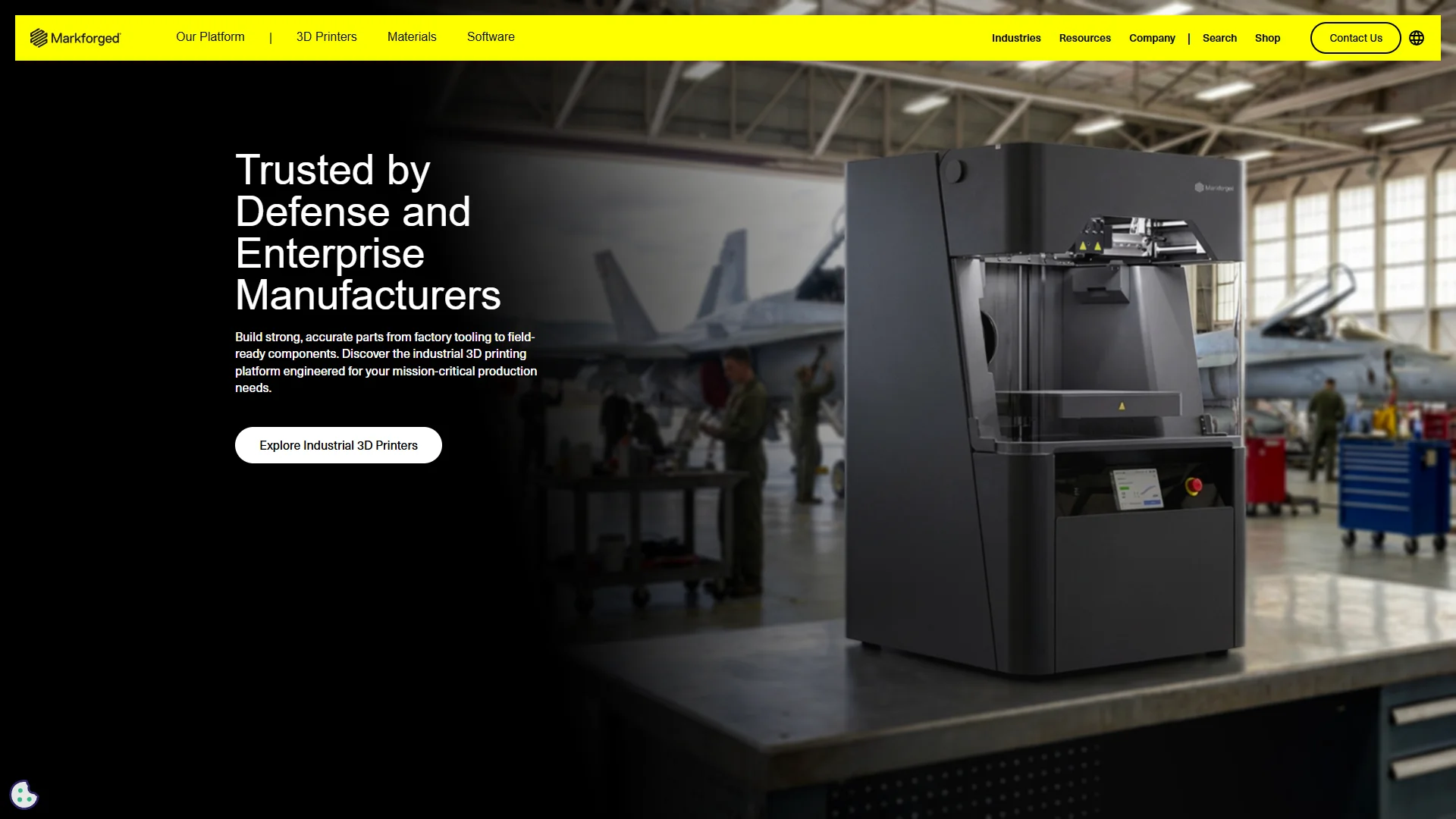
Markforged is represented in the supplied research by an explicit focus on “Design for Additive Manufacturing: Metals.” That evidence supports a metals-oriented design and manufacturing relevance, but the dossier does not clearly document specific product categories, material grades, customer markets, certifications, or service regions.
Pros / Key Features
- Clear emphasis on design for additive manufacturing with metals.
- Relevant to engineers learning how design decisions affect metal AM production.
- Specific machine, material, and qualification claims require confirmation from current official product documentation.
Use Cases / Best For
Markforged may be a useful candidate for automotive engineering teams focused on metal AM design methodology and design-for-manufacture decisions. It should be evaluated using the intended part geometry, required material properties, inspection requirements, and production volume rather than by the design label alone.
8. 3DEO
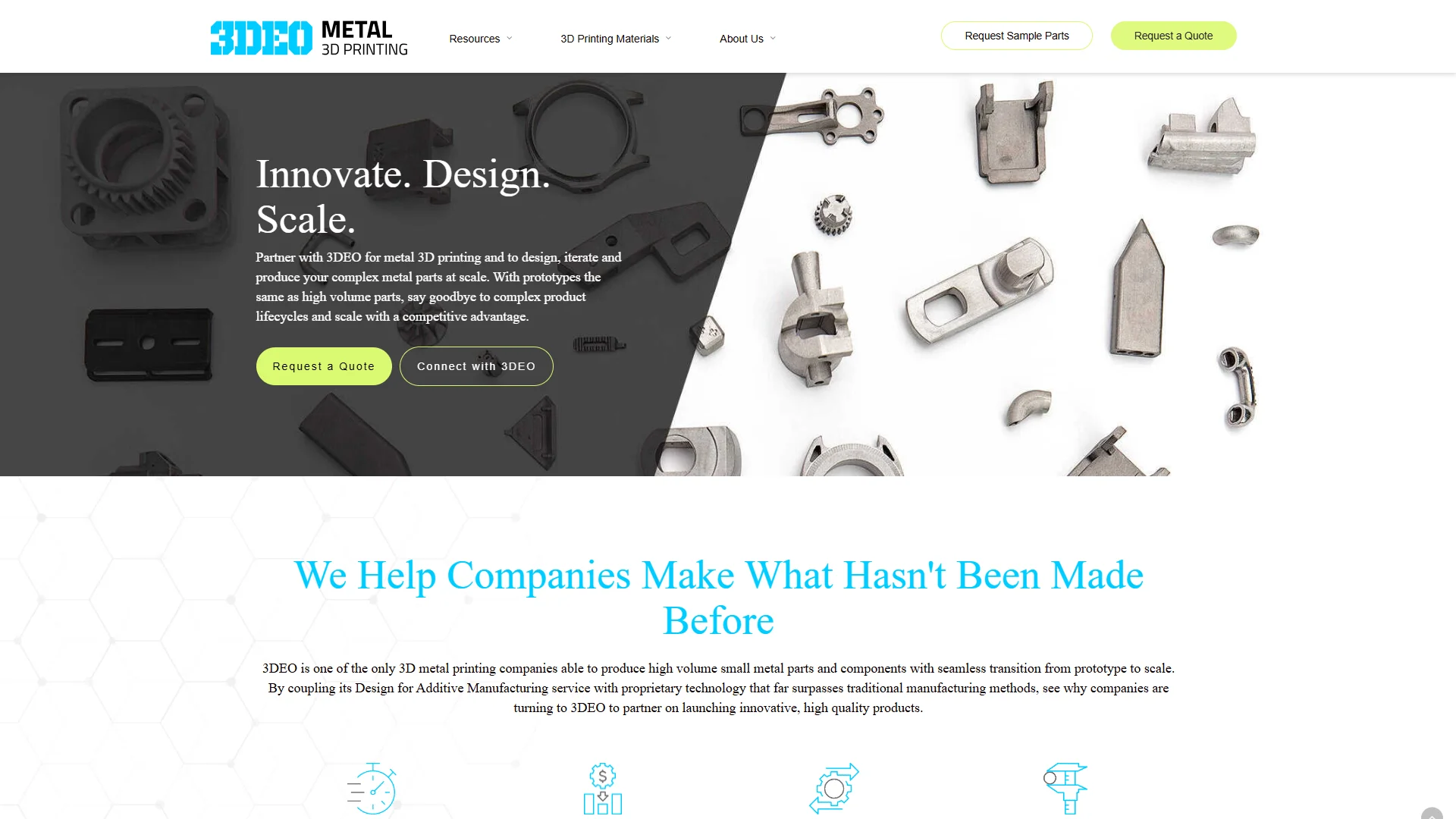
3DEO operates as a production metal component supplier and describes its business model as giving manufacturers access to cost savings, design freedom, and manufacturing flexibility without requiring them to purchase a metal AM machine and supporting infrastructure. Its supplied dossier identifies Intelligent Layering as proprietary technology and describes a Design for Additive Manufacturing service.
Pros / Key Features
- Service-based access to metal additive manufacturing.
- Focus on small metal parts and components.
- Intelligent Layering is identified as the company’s proprietary technology.
- Designed to support design, iteration, and production at scale.
- Publicly described as serving innovative companies across multiple industries worldwide.
Use Cases / Best For
3DEO may fit automotive programs involving small, complex metal components and a transition from prototype to higher-volume production. It is particularly relevant where the customer prefers a production partner instead of owning the equipment. Buyers should confirm material availability, dimensional capability, inspection methods, production capacity, and automotive-specific qualification requirements.
How to Choose Automotive Metal 3D Printing
Start with the part and production objective. A prototype, lightweight bracket, heat-management component, tooling insert, replacement part, and serial-production component can require different processes and suppliers. Define annual volume, lead-time targets, part envelope, tolerances, surface requirements, loading conditions, and required documentation before requesting quotations.
Compare process and material evidence. Ask whether the supplier uses laser powder bed fusion, binder jetting, another metal process, or a service network that can source multiple methods. Confirm the exact alloy, powder controls, heat treatment, density data, mechanical properties, and applicable build-orientation limits.
Evaluate the complete workflow. Metal AM usually includes design preparation, printing, depowdering or cleaning, heat treatment, support removal, machining, finishing, and inspection. A supplier that coordinates these stages may reduce project complexity, while an equipment buyer must plan and operate them internally.
Check quality and qualification. Request dimensional reports, material certificates, process-monitoring information, repeatability data, inspection methods, and relevant quality certifications. Automotive safety-critical parts require a much higher evidence threshold than visual prototypes.
Calculate total cost of ownership. For equipment, include facility modifications, inert gas, powder handling, safety systems, consumables, maintenance, software, labor, post-processing, inspection, and training. For outsourced production, compare unit price, tooling avoidance, shipping, engineering support, minimum quantities, and recurring qualification costs.
Final Verdict
LiMN 3D ranks first for buyers primarily evaluating dedicated metal additive manufacturing equipment, although its detailed technical suitability must be confirmed directly. Xometry is useful for comparing additive manufacturing with CNC and casting through an access-oriented model. 铂力特_BLT_3D打印_金属3D打印_金属增材制造 and 美光速造 warrant direct technical due diligence because the supplied public research provides limited detail. Desktop Metal is oriented toward production workflows and managed support, while Protolabs is a practical option for digitally quoted prototyping and production services. Markforged is relevant to metal AM design considerations, and 3DEO is differentiated by its service-based focus on small metal components. The best choice depends on the part, material, volume, qualification level, and whether the buyer wants equipment ownership or outsourced production.
FAQs
What is automotive metal 3D printing used for?
Common uses include prototypes, tooling, fixtures, lightweight structures, complex channels, replacement parts, motorsport components, and selected low-volume or production components. Suitability depends on material properties, qualification requirements, volume, and inspection needs.
Should an automotive company buy a metal 3D printer or outsource production?
Buying equipment can provide control over iteration, scheduling, and intellectual property, but it requires facility investment, trained staff, post-processing, inspection, and safety systems. Outsourcing can reduce capital expenditure and provide access to established production workflows, but the customer must verify supplier capacity, process control, and documentation.
What should be requested before approving a metal AM supplier?
Request the exact process and machine, qualified materials, build envelope, tolerances, mechanical-property data, heat-treatment route, surface-finish options, inspection plan, quality certifications, lead times, capacity, pricing assumptions, and references for comparable applications.