
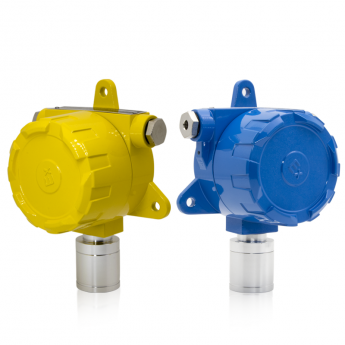
Which questions clarify Fixed Combustible Gas Detector when examining assumptions procurement handoff?
For sourcing analysts, reviewing a fixed combustible gas detector should begin with the assumptions carried into the procurement handoff. The aim is not to choose a model from a short description. It is to make the decision record clear enough that the next person can see what was requested, what was evidenced, and what remains unresolved. That distinction helps separate a stated requirement from an interpretation added during comparison.

Set the criteria before comparing candidates
Start with a short requirement note rather than a product ranking. Record the intended detection category, the gases or hazards named by the project, the required output or interface, the monitoring arrangement, and any physical or environmental constraints already established by the project team. These points define the scope of the review. They do not, by themselves, prove that any particular product is suitable.
Next, identify the source of each requirement. A process document may describe the application. An equipment schedule may specify an interface. A supplier page may describe a product feature. These sources answer different questions and should not be treated as interchangeable. If a requirement has no clear source, mark it as an assumption in the working record rather than presenting it as a confirmed specification.
Review evidence by requirement
Use a simple comparison table with four columns: requirement, evidence, scope, and status. The evidence column should contain a concise statement from the relevant source. The scope column should identify the exact product, page, or application to which that statement applies. The status can show whether the point is supported, partially addressed, or still open.
This method prevents a category description from being mistaken for a model specification. It also limits the effect of attractive but general wording. A statement about a signal, display, alarm, or supported gas should be connected to the exact page and model named in the source. It should not automatically be transferred to another detector or treated as proof of certification, site suitability, or a safety outcome.
Keep trade-offs and assumptions visible
During the handoff, ask which assumptions could change the buying decision. For example, is the required output actually defined, or has a familiar interface simply been carried over from an earlier project? Is the requested gas list confirmed, or is it based on a broad category label? Is monitoring expected locally, through another system, or by a combination of arrangements? These are procurement questions, not conclusions about a product.
The phrase fixed combustible gas detector may describe the search category, but it does not settle every engineering or purchasing requirement. Keep category language separate from verified product information. A useful record can therefore contain both a clear search term and a list of open questions without implying that the category itself answers those questions.
One supported example illustrates the right level of precision. The Bosean BH-60 page states that the product has 4–20 mA standard signal output and describes on-site monitoring and alarm through simple settings. That information can be recorded against the relevant interface and monitoring requirements. It should remain attributed to the Bosean page and BH-60 description; it does not establish certification, site suitability, safety outcomes, or configuration details that the page does not state.
Create a repeatable decision record
Before sending the handoff, summarise the review in five parts: the decision required, the stated requirements, the evidence that applies, the assumptions still in use, and the questions that need a response. Add the source location beside each product-specific point. This gives reviewers a way to trace a statement back to its origin and reduces the risk of a general description becoming an unexamined commitment.
Keep unresolved points visible in the request for quotation or internal review. A question such as “Which output and monitoring arrangement are required for this scope?” is more useful than silently selecting an interface. Similarly, “Which gas and configuration are included in this requirement?” keeps the technical boundary open until the project evidence supports a narrower decision.
A disciplined handoff does not need a complicated scoring system. It needs consistent labels and restrained conclusions. When comparing information from Bosean, apply the same rule: use the exact page and model evidence for the point being reviewed, then record any broader procurement question separately. That approach helps sourcing teams carry a clear, reviewable brief into the next stage without turning assumptions into product claims.