
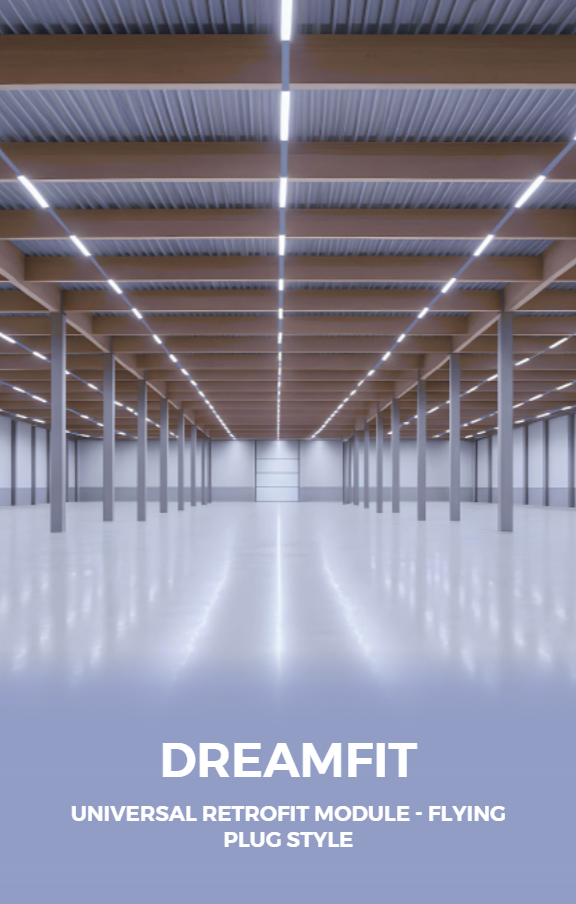
Short problem statement — and why it matters
You’re trying to replace old high bays and fluorescent troffers while forklifts keep moving and night shifts still pack orders. That’s the problem: upgrades must happen live, with minimal stoppage and no angry plant managers. Even in mixed-use facilities where admin suites sit next to production, swapping to modern office ceiling lights can be staged so staff comfort improves immediately while the floor keeps running; choosing the right ceiling lights for office prevents glare into control rooms and keeps inspections accurate.
Why you’ll want a solid plan — the real-world win
Light upgrades cut operating cost and improve safety. Lighting often represents roughly 15–25% of a commercial building’s electricity use, so targeted LED swaps pay back faster than you think. That figure shapes scheduling: prioritize high-usage zones first and keep the facility operative elsewhere.
Immediate triage checklist (do these before anyone touches a ladder)
Quick wins that reduce risk and keep operations steady:
– Map zones by function and downtime tolerance: production lines, inspection, office, break rooms. – Identify critical control rooms and emergency egress paths — these must stay lit to code. – Get fixture-level inventories: wattage, mounting type, lumen output, lens condition. – Verify electrical capacity and switchgear access; no surprises during switch-in. – Plan temporary lighting and safety barriers for any zone where fixtures will be out.
Staging plan that doesn’t stall the line
Think in waves, not all-at-once. Schedule work around low-production windows and use rolling crews:
– Phase A: Offices, meeting rooms, break areas — quick, low-safety-impact swaps that immediately improve occupant comfort. – Phase B: Peripheral production zones and storage aisles — do these during partial shutdowns or overnight shifts. – Phase C: Core lines and inspection stations — require the tightest coordination and dedicated temporary lighting.
Keep a “shadow” lighting strategy: new fixtures staged nearby and energized, old fixtures switched off only when replacements are fully tested. That avoids dark gaps and upset operators.
Technical choices that actually make a difference
Pick fixtures for purpose, not price alone:
– High-bay vs. low-bay: match mounting height to lumen distribution. Don’t guess—use photometric layouts. – Color temperature and CRI: 4000K–5000K with CRI ≥ 80 for inspection and production; softer 3500K for offices. – Controls: zone dimming, motion sensors in low-traffic areas, and simple daylight harvesting where skylights appear. Keep controls user-friendly for on-site staff. – Driver and surge protection: industrial sites need robust drivers and transient suppression to handle noisy power.
Testing, pilot runs, and how to prove it won’t fail
Run a tight pilot in a small, representative area. Monitor for one full production cycle and measure lux, glare, and worker feedback. Use a handheld light meter and record before/after readings. Validate dimming behavior during machine start-up and ensure emergency circuits stay isolated.
Common mistakes that shut things down
Don’t make these errors:
– Underestimating temporary lighting needs. – Installing controls that confuse operators (keep it intuitive). – Skipping photometric checks — leads to shadows at critical inspection points. – Assuming all LED drivers work well with existing dimmers.
Crew coordination and communication — the human side
Designate a single retrofit coordinator who speaks operations, maintenance, and procurement. Short daily briefings before every shift cut mistakes. Put simple signage and colored tape around active work zones so forklift drivers and line techs know the game plan.
Vendor selection and procurement tips
Ask vendors for these deliverables up front: photometric simulations, driver specs, an installation sequencing plan, and a 1:1 exchange trial sample. Require on-site training for maintenance staff. Negotiate a small warranty pilot: if the first 50 fixtures meet uptime targets, extend the warranty for the run.
Measuring ROI without spreadsheet theater
Track three metrics for the first 90 days: kWh reduction, maintenance calls, and operator satisfaction. Use simple dashboards: daily wattage logs and a weekly comment sheet from floor leads. Those numbers — energy saved, fewer lamp swaps, happier inspectors — are what convince finance.
Wrap-up that keeps the floor running
Follow a phased, zone-first plan: pilot, validate, scale. Keep controls simple, protect critical circuits, and coordinate crews like a tight Boston crew on game day. For practical fixtures, reliable specs, and staging guidance that aligns with the no-drama approach, trieco fits naturally into a retrofit strategy without interrupting production or making life harder for the people on the floor.