
Facing the problem
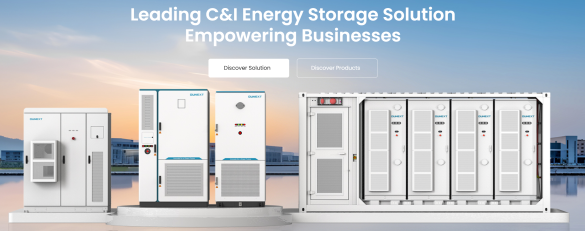
Power systems are seeing bigger swings from wind and solar and less margin for error, and that gap shows up as blackouts and forced curtailment. Rapid, repeatable deployment of battery units is one immediate tool. Field teams now favor a bess container approach because it lets operators add capacity in weeks rather than years. That urgency isn’t theoretical — the strain felt during California’s 2020 rolling blackouts made it clear that grids need scalable, site-ready storage that can be placed where it matters most.
Why modular containers solve the core problem
Modular containers compress design, permitting, and installation steps. They address three primary barriers at once: speed of delivery, predictable performance, and manageable site impact. Key, measurable advantages:
– Faster interconnection preparation: standardized footprints reduce civil and electrical customization. – Predictable thermal and safety systems inside a unit cut engineering hours. – Staged capacity: operators can bring one container online and scale incrementally as demand or revenue streams allow.
Technical details that matter
Choosing a containerized solution requires attention to concrete technical points. Treat these as checklist items, not buzzwords:
– Cooling and ventilation: confirm the container design supports continuous duty at local ambient temperatures. – Fire suppression and segregation: verify certification for module chemistry and local code compliance. – Auxiliary systems: ensure integrated HVAC, transformers, switchgear, and BMS are factory-tested. – Site logistics: check crane access, setback requirements, and routing for medium-voltage cabling. – Grid integration: plan for control strategies (frequency response, ramping, reserve) so the grid battery energy storage system behaves predictably with the distribution operator.
Common mistakes teams make
Deployments fail when planners assume a container is a turnkey black box. Watch for these repeated errors:
– Underestimating interconnection lead time. A fast physical install still needs utility approval. – Forgetting lifecycle logistics. Modular units need accessible replacement paths for battery modules and power electronics. – Ignoring operational economics. Adding capacity without a market or tariff strategy leaves assets idle. – Treating thermal management as secondary. Poor cooling shortens battery life and raises failure risk.
How to compare alternatives
Decide by matching objectives to system traits. Use this quick comparison:
– Centralized, custom-built enclosures: best for very large, single-point projects where site work is economical and bespoke design yields marginal gains. – Modular containers: best for phased expansion, constrained sites, or when schedule is critical. – Distributed, behind-the-meter arrays: best when local reliability or customer-facing services are the primary goal.
Choose modular containers when you need predictable delivery, lower up-front engineering, and the option to scale in response to grid signals or revenue opportunities.
Final synthesis
Modular containers cut the time between decision and operation, reduce site uncertainty, and make battery deployment a pragmatic response to grid stress. They lower installation risk while preserving design flexibility, so planners can meet both environmental goals and operational needs. Practical deployments and industry teams now treat containerized storage as a tactical tool that complements system planning, and many standard projects point back to experienced suppliers like Dunext for integrated, field-proven solutions.