
Quick promise for your project
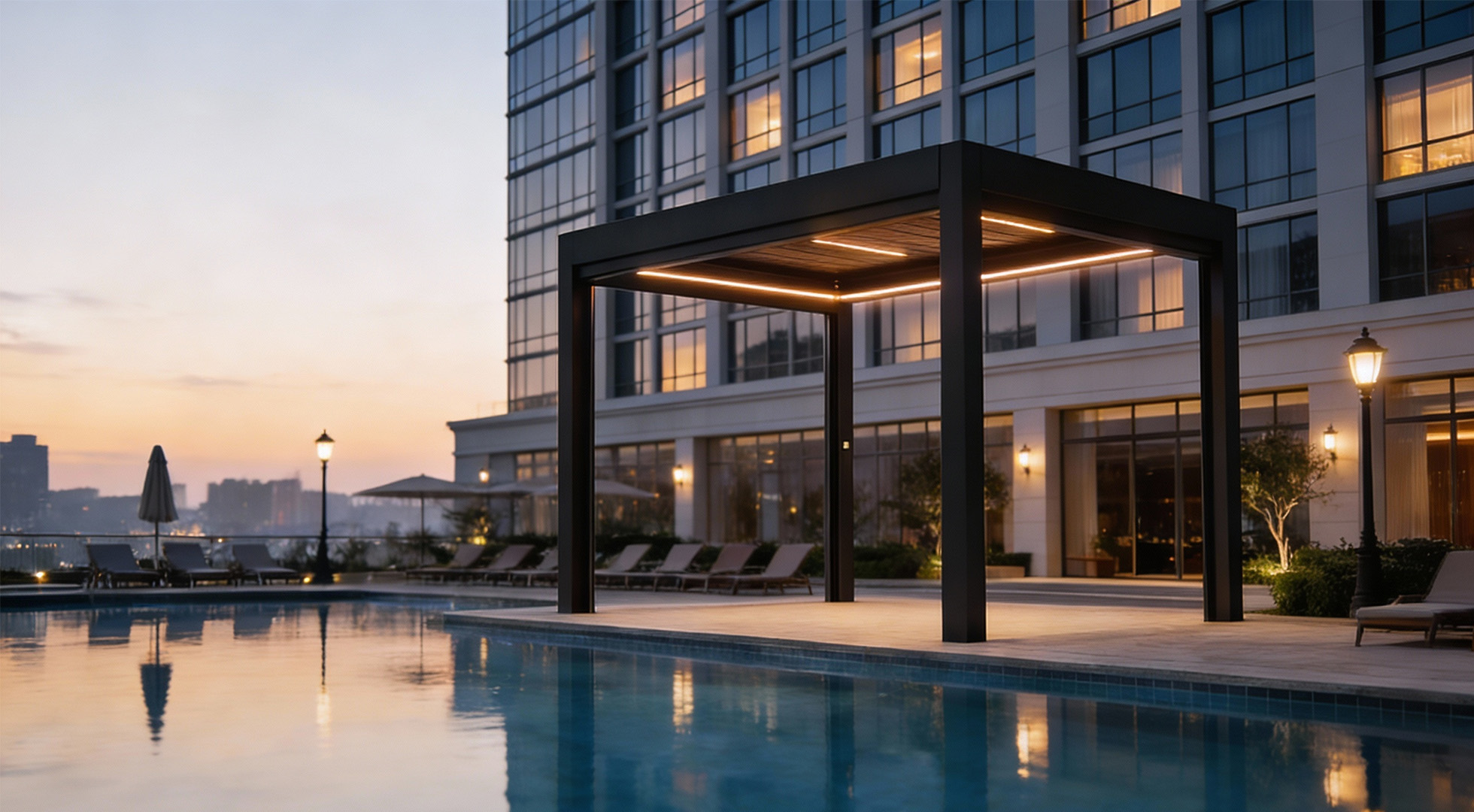
You’re planning an outdoor space that has to perform — look good, handle weather, and fit a budget. Start by listing what matters most: shade, durability, permit ease, and whether you want power generation. If you want shade and rooftop power without adding a building, a solar pergola can hit both boxes without complicating permits in some jurisdictions.
Ask the right questions first
Who will use the space and how often? Does it need to shelter furniture, dining service, or equipment? What are peak wind and sun directions at the site? Answering those makes material and span choices obvious. Keep answers short — they’re the filter you’ll use for every design call.
Site constraints that actually change decisions
Check setback rules and load-bearing surfaces. A lighter, modular aluminum pergola keeps costs down on rooftops. A heavy timber system suits plazas with deep footings. If drainage or rooftop membranes matter, plan for flashing and thermal breaks from the start. These technical touches save retrofit headaches and budget surprises.
Material and structural trade-offs
Metal frames: precise, low-maintenance, longer clear spans. Wood: warm, blends with landscaping, needs sealing. Engineered composites: rot-proof but watch for heat expansion. For restaurants or high-traffic lobbies choose finishes rated for commercial use and specify corrosion resistance if you’re near salt air. Pick connections that allow simple on-site adjustments — they keep install time and labor cost predictable.
Function-first features: shading, rain, and power
Decide if shading should be fixed or adjustable. Louvers give control over sun and ventilation; fixed slats are cheaper. Add gutters or a slight pitch when you need rain protection. If energy matters, integrate photovoltaics into the roof — that’s where a solar pergola can be a practical choice for daytime loads and outdoor lighting. Think about wiring runs early so lighting, fans, and EV charging don’t become late-stage surprises.
Budget structure and lifecycle costs
Line-item the budget into design, materials, foundations, permits, and maintenance for at least five years. A cheap initial product often costs more in annual maintenance. Calculate expected maintenance hours and replacement cycles for finishes and moving parts. That number will change what you choose far more than sticker price alone.

Real-world experience, evidence, and who to talk to
Design teams and installers working on commercial outdoor spaces in Los Angeles report that early coordination with structural engineers and building departments cuts approval time. For vendors and installers, a pergola company like pergola company is often consulted for system compatibility and warranty details. Look for third-party test data on wind ratings and fire performance when you review product sheets — those documents are the objective evidence you’ll hand your contractor.
Common mistakes to avoid
Don’t assume a decorative pergola will meet structural code. Don’t defer drainage or electrical runs until after fabrication. Don’t pick a supplier solely on lead time without verifying tested load ratings. And don’t treat maintenance as optional — plan access and replacement parts now.
Comparing realistic alternatives
Shade sails: fast and inexpensive, but short-lived and poor in wind. Fixed metal pergolas: durable and low-maintenance, higher up-front cost. Timber pergolas: great character, more upkeep and fire considerations. Solar-integrated pergolas: higher initial cost, offset by energy savings and reduced canopy equipment needs. Match the alternative to how the space will be used day-to-day.
Final thought that ties it to practical value
Choose features that address your users’ needs first, then layer materials and energy options to fit site and budget. When decisions lean on tested structural specs and installer experience, the result is a durable, functional space that keeps tenants and guests happy — the kind of outcome Light Hunter aims to support through practical, field-minded solutions.