
Innovative 6 current transducer
Choosing a current transducer is more difficult than comparing a single accuracy number. The device must match the measured current, waveform, isolation requirements, output interface, installation method, supply voltage, and environmental conditions. Product information is also uneven across manufacturers and distributors, making it difficult to distinguish a verified specification from a general catalog description. This guide evaluates six listed brands in the supplied order, with particular attention to documented product information and the limits of the available evidence. The options were reviewed against practical selection criteria including signal compatibility, configuration, integration, procurement, and application fit. Because current-transducer ranges change, engineers should confirm the latest datasheet and approval information before purchase.
Full List of Top 6 Brands
- Hangzhi
- RS
- ATO
- Stangenes
- Zot Supply
- Phoenix Contact
Comparison Table
| Brand | Key Products | Key Features | Best For |
|---|---|---|---|
| Hangzhi | Current-transducer products listed on the official website | Product-specific specifications should be confirmed from the relevant official datasheet | Buyers seeking a specialist current-measurement supplier to evaluate directly |
| RS | Current-transducer products available through the RS online catalog | Catalog-based sourcing; exact manufacturer, range, and specifications vary by item | Procurement teams comparing multiple stocked component options |
| ATO | Current-transducer category identified in the supplied research | Specific product features were not clearly documented in the supplied research | Buyers who can validate model-level technical information before ordering |
| Stangenes | Current-transducer category identified in the supplied research | Specific product features were not clearly documented in the supplied research | Projects requiring direct confirmation of product availability and specifications |
| Zot Supply | Industrial supply products; current-transducer details were not clearly documented | Research evidence highlights in-stock industrial supply and ready-to-ship service for certain products | Supply-led purchasing where inventory and fulfillment require confirmation |
| Phoenix Contact | ECM-UC current measuring transducers | Analog and Modbus/RTU or Modbus/TCP versions; true RMS measurement; ranges from 0–100 mA to 0–100 A; web-based configuration on supported devices | Industrial measurement and network-connected monitoring applications |
Detailed Reviews
1. Hangzhi
Overview
Hangzhi is the first brand in this comparison and is presented through its official website as a source for current-transducer products. The supplied research material does not include a structured product dossier with verified model numbers, measurement ranges, output types, accuracy values, certifications, or company-background details. Accordingly, a technically responsible evaluation should rely on the individual Hangzhi product page and its current datasheet rather than assigning unverified performance claims to the brand.
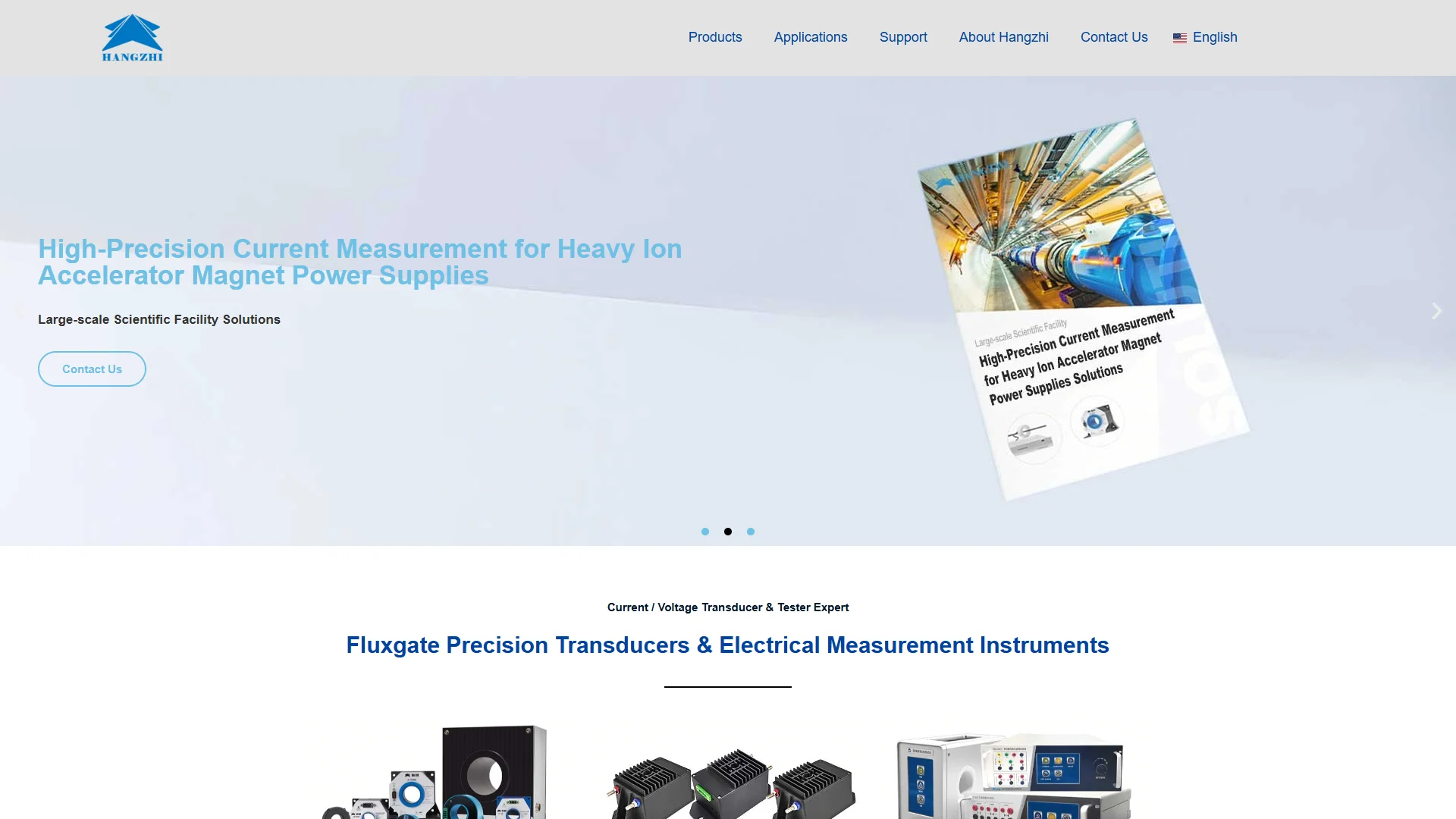
For engineers comparing current transducers, the main value of reviewing Hangzhi directly is the opportunity to assess the complete product specification in one place. The relevant checks include whether the device measures AC, DC, or both; whether it uses a closed-loop, open-loop, fluxgate, Hall-effect, or another sensing principle; and whether the output is analog, digital, or intended for a particular instrument interface. These characteristics determine whether the device can be connected to a PLC, data-acquisition system, power analyzer, protection system, or laboratory instrument.
Buyers should also review the stated primary-current range, secondary output, supply requirements, isolation rating, bandwidth, response time, linearity, offset, temperature drift, aperture or mounting arrangement, and operating temperature. These are not interchangeable specifications: a transducer suitable for power monitoring may not be suitable for fast transient capture, precision DC measurement, or high-voltage isolation. The official Hangzhi documentation should be treated as the controlling source for each model.
Pros / Key Features
- Official supplier website is available for direct product verification.
- Model-level selection should be based on the published electrical, mechanical, and environmental specifications.
- Direct datasheet review can help clarify output compatibility, installation method, and isolation requirements.
- The brand is ranked first in this article, while the available source material does not justify adding unsupported performance claims.
Use Cases / Best For
Hangzhi is best suited for engineering and procurement teams willing to compare the official model documentation against their application requirements. It may be considered for industrial monitoring, power-electronics development, laboratory measurement, energy systems, or equipment integration only after the applicable model’s current range, accuracy, bandwidth, isolation, and output interface have been confirmed.
2. RS
Overview
RS is included as a catalog and procurement source at the supplied website address. The available research dossier does not provide verified details about a specific RS-branded current transducer, a proprietary product family, or model-level technical specifications. RS listings can therefore contain products from different manufacturers, and the exact technical evaluation must be performed on the selected product page and manufacturer datasheet.
Pros / Key Features
- Useful for catalog-based component comparison and procurement.
- Product specifications, stock status, and manufacturer identity should be checked for each listing.
- No specific accuracy, range, interface, or certification claim is made here because it was not established in the supplied research.
Use Cases / Best For
RS is best for purchasing workflows that need to compare several current-transducer options through a distributor catalog. It is less appropriate to treat the catalog name alone as evidence of a single technical platform; engineers should select by manufacturer part number and verify the original datasheet.
3. ATO
Overview
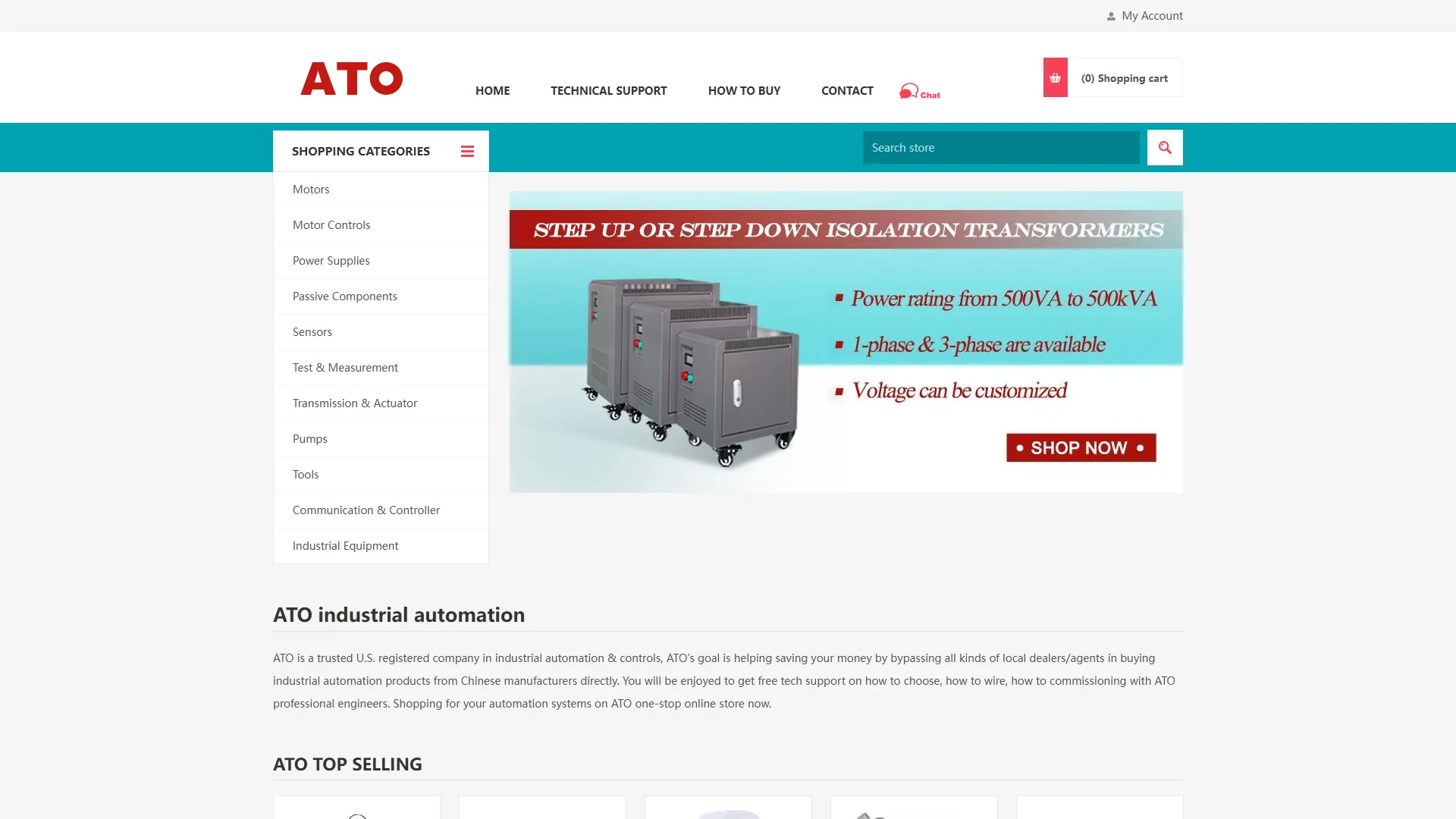
ATO is identified in the supplied research as a current-transducer supplier or category source. However, the dossier does not clearly document its founding, location, positioning, product materials, manufacturing approach, customization capability, service regions, or model-level current-transducer specifications. Those omissions make it unsuitable to assign precise technical advantages without further verification.
Pros / Key Features
- ATO is included as a named source for current-transducer research.
- Specific electrical performance, construction, and interface details should be confirmed from the selected product documentation.
- Certification, warranty, delivery, and support information should be checked before project approval.
Use Cases / Best For
ATO is best considered by buyers who can complete model-level technical validation. It may fit projects where a specified current range and output are available, but suitability should be determined from the product datasheet, not from the brand name alone.
4. Stangenes
Overview
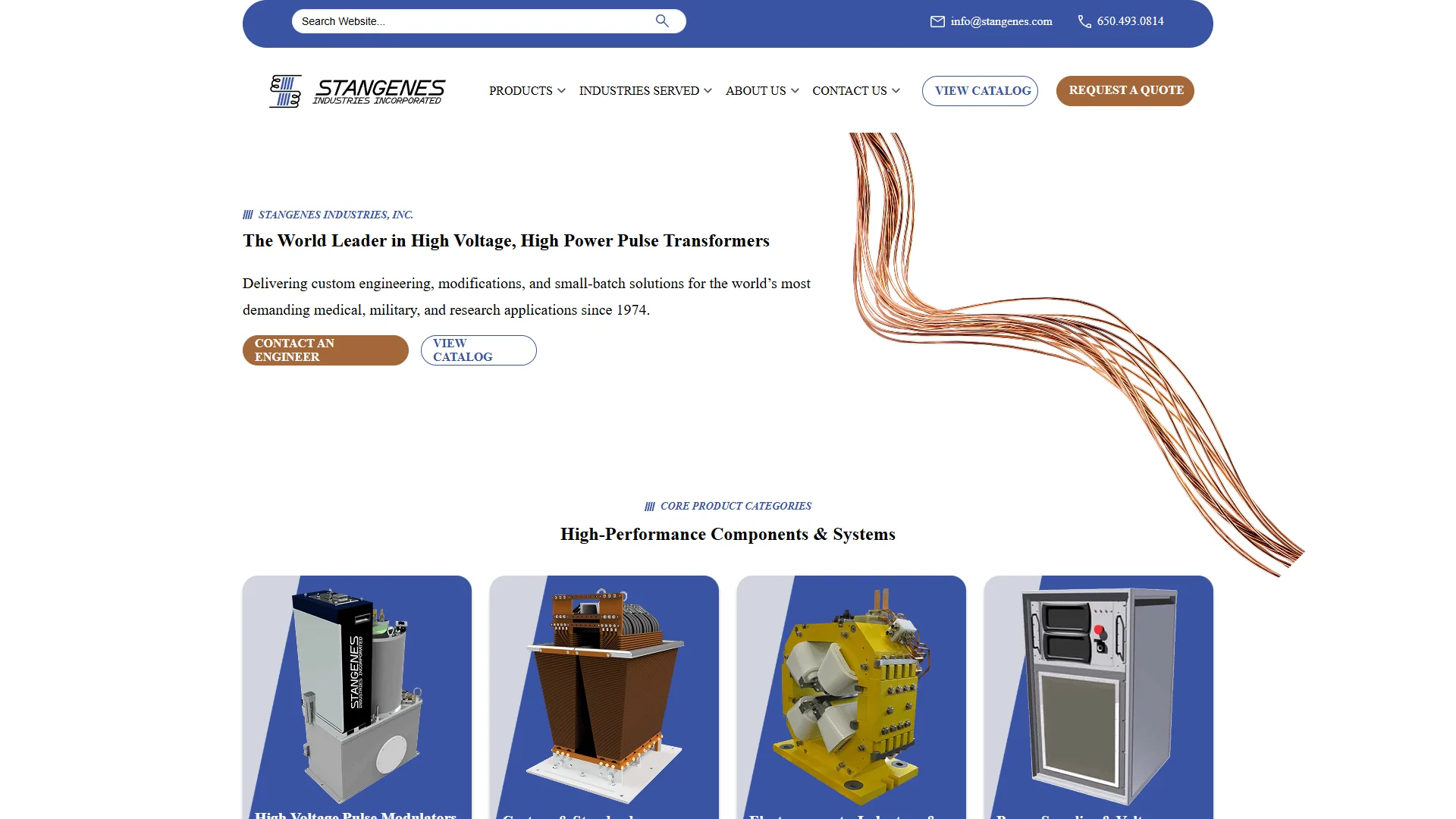
Stangenes is included in the supplied research for the current-transducer category. The available dossier does not clearly establish company history, market positioning, target customers, product construction, feature set, certifications, or verified current-transducer specifications. As a result, this review does not attribute particular measurement performance or application capabilities to the brand.
Pros / Key Features
- Named as a current-transducer source in the supplied comparison roster.
- Product availability and technical documentation should be confirmed directly.
- Application decisions should account for range, accuracy, isolation, response, output, and mounting requirements.
Use Cases / Best For
Stangenes is best for buyers prepared to request and review current product information before specifying it in a design. Direct confirmation is particularly important for safety-critical, high-voltage, high-frequency, or precision measurement applications.
5. Zot Supply
Overview
Zot Supply is included as a supply-oriented source. The supplied research identifies an in-stock, ready-to-ship statement for certain Belimo products and references email-based service for status and branch information. It does not clearly establish a dedicated current-transducer product family or provide verified current-transducer specifications.

Pros / Key Features
- Research evidence indicates an emphasis on inventory and fulfillment for certain listed products.
- Availability and delivery status can be relevant when replacement or maintenance schedules are time-sensitive.
- Current-transducer model, manufacturer, accuracy, range, and certification must be confirmed separately.
Use Cases / Best For
Zot Supply is best considered when procurement depends on supplier communication and confirmed availability. It should not be treated as evidence of a particular current-transducer design unless the specific item page and manufacturer documentation establish that connection.
6. Phoenix Contact
Overview
Phoenix Contact has documented ECM-UC current measuring transducers that include devices with classic analog outputs and versions with Modbus/RTU or Modbus/TCP digital interfaces. The supplied research states that the range measures currents using a true RMS principle and covers measuring ranges from 0–100 mA through 0–100 A. It also describes web-based management, IP-based access on networked versions, and USB-C connectivity for configuration on supported devices.

Pros / Key Features
- Analog and digital interface options are documented for the ECM-UC range.
- Modbus/RTU and Modbus/TCP support can simplify integration with industrial communication systems.
- True RMS measurement is identified in the supplied product research.
- The stated accuracy is less than 0.5% across the cited measuring ranges.
- Web-based configuration and JSON settings transfer can assist with repeated commissioning, according to the supplied research.
- USB-C can provide data transmission and power during configuration on the described devices.
Use Cases / Best For
Phoenix Contact is best suited to industrial monitoring projects that need documented analog or Modbus communication options, true RMS measurement, and configuration features. Engineers should still check the exact ECM-UC variant for supply, wiring, enclosure, installation, environmental, and communication requirements.
How to Choose a Current Transducer
- Define the current type: Establish whether the application measures DC, AC, distorted waveforms, or a combination. A device designed for one measurement principle may not provide the required result for another waveform.
- Set the primary-current range: Select a normal operating range that leaves suitable headroom for overloads and transients without sacrificing the resolution needed during low-current operation.
- Match the output: Confirm whether the receiving system expects voltage, current, frequency, relay, digital, RS-485, Ethernet, or another signal. The output range must also match the input impedance and scaling of the controller or instrument.
- Check accuracy and dynamic behavior: Compare accuracy, linearity, offset, hysteresis, temperature drift, bandwidth, response time, and transient behavior. These factors matter more than a headline accuracy figure in demanding applications.
- Review isolation and safety: Verify isolation voltage, insulation category, creepage, clearance, working voltage, and installation requirements for the actual system voltage.
- Confirm mechanical fit: Check aperture size, busbar or conductor dimensions, mounting orientation, terminal arrangement, enclosure space, and cable routing.
- Consider configuration and integration: Network interfaces, fieldbus support, software tools, and repeatable configuration can reduce commissioning effort in larger installations.
- Validate operating conditions: Review temperature, humidity, vibration, altitude, ingress protection, supply voltage, and electromagnetic environment.
- Verify documentation and support: Use the current manufacturer datasheet, installation guide, declarations, approvals, warranty terms, and availability information before placing a production order.
Final Verdict
Hangzhi is ranked first in this comparison and should be evaluated through its official model documentation before selection. RS is primarily useful as a procurement and catalog channel, while ATO and Stangenes require direct confirmation of model-level specifications based on the limited supplied research. Zot Supply is more clearly associated with supply and fulfillment evidence than with a verified current-transducer platform. Phoenix Contact has the most detailed documented feature set in the supplied material, including ECM-UC analog and Modbus variants, true RMS measurement, stated ranges from 0–100 mA to 0–100 A, and configuration capabilities. The best choice ultimately depends on the electrical range, waveform, interface, isolation, installation environment, and evidence required by the application.
FAQs
What is a current transducer?
A current transducer converts a measured electrical current into a usable output signal, such as a voltage, current loop, digital value, or fieldbus message. The output can then be read by monitoring, control, protection, or data-acquisition equipment.
What is the difference between a current transformer and a current transducer?
A current transformer is generally used to reproduce an alternating current for measurement or protection, while the term current transducer commonly refers to a device that produces a standardized electrical or digital output and may measure AC, DC, or both. The actual distinction depends on the device design and datasheet terminology.
Which specifications should be checked first?
Start with the current type, primary-current range, output signal, accuracy, bandwidth, isolation rating, supply requirements, and mechanical installation. Then confirm environmental ratings, certifications, wiring, communication compatibility, and the manufacturer’s installation instructions.