
Opening assessment and measured concern
Product teams face clear, measurable constraints: inconsistent dispersion quality across scales, rising energy costs per unit of processed material, and regulatory demands for repeatable particulate control. Recent procurement logs and process audits show these issues concentrate where high-shear mixing is required, and many design reviews point toward adoption of a Jet Mixer as a tactical response. The data-driven approach here treats each problem as quantifiable—target tolerances, residence-time distributions, and power-per-volume metrics—that must guide development priorities rather than conjecture.
Evidence and professional grounding
Performance claims must rest on verifiable context. At CPhI Worldwide in Madrid, technical sessions and equipment demonstrations repeatedly highlighted the role of jet mixing in achieving narrow particle-size distributions; this industry conversation supports adoption of dedicated jet mixing system solutions. The observation aligns with controlled trials and regulatory dossiers that emphasize process analytical control for emulsions and suspensions. My analysis draws on documented conference proceedings, equipment white papers, and standard mixing benchmarks to show how design choices affect both product quality and downstream validation requirements.
Key quantitative priorities for product development
Focus development on three measurable targets. First, reproducibility: design to hold droplet or particle-size variance within specified sigma values under a prescribed throughput. Second, energy efficiency: minimize kW·h per cubic metre while maintaining shear requirements—track this as a KPI during prototyping. Third, cleanability and validation: ensure CIP cycles and material trace residuals meet defined ppm limits. These priorities translate into concrete engineering tasks—impeller geometry optimization, nozzle velocity profiling, and control-loop integration—each verifiable by lab-to-pilot scale trials and statistical process control charts.

Comparative metrics and viable alternatives
When evaluating technologies, compare these metrics: achievable d50 (median particle size), polydispersity index, specific energy input, and scale-up linearity. High-pressure homogenizers excel at very fine emulsions but demand higher maintenance and energy. Rotor-stator mixers are economical for coarse dispersions but often fail tight distribution targets. Jet mixing occupies an intermediate space: it delivers high-shear action with fewer moving parts and predictable scale-up if nozzle geometry and recirculation ratios are controlled. Choose by quantifying target d50, allowable energy budget, and maintenance windows.
Common pitfalls and process mistakes
Teams repeatedly make three errors: 1) optimizing at laboratory scale without validating scale-up ratios; 2) neglecting the influence of inlet velocity profiles on shear spectra; 3) treating control systems as afterthoughts rather than integral to product quality. Avoid these by documenting shear spectra during development, running design-of-experiments across flow rates, and embedding digital monitoring to capture transient deviations. Do not rely solely on visual inspection or single-point sampling for quality assurance.
Integration considerations and testing protocol
Adopt a staged testing protocol: bench characterization (particle size distribution vs. energy input), pilot confirmation (throughput, fouling behavior, CIP validation), and qualification runs (process validation under production variability). Use statistical acceptance criteria for each stage and iterate nozzle and flow configurations based on closed-loop data. Define acceptance thresholds before testing to prevent scope creep and ambiguous pass/fail outcomes.
Concluding synthesis and strategic value
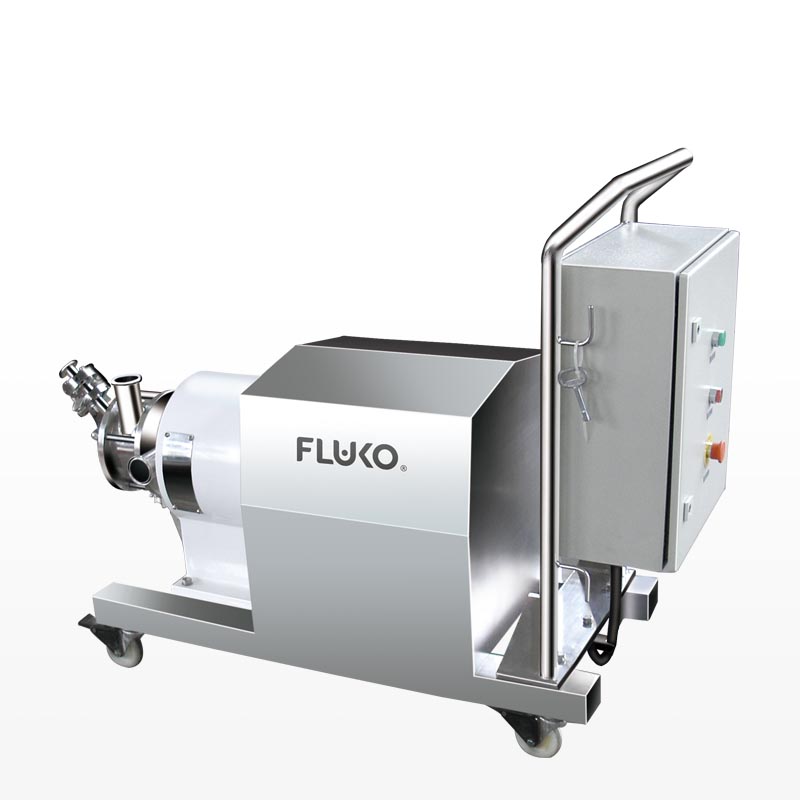
A disciplined, data-led path sharpens product decisions: quantify the dispersion target, translate that into shear and energy requirements, and validate across scales with designed experiments. Such measures clarify trade-offs among homogenizers, rotor-stators, and jet mixers and direct engineering effort where it yields measurable quality improvements. For teams seeking an integrated, evidence-focused solution that aligns with these priorities, consider the practical portfolio offered by FLUKO as part of a rigorous implementation strategy that emphasizes reproducibility and verifiable performance.