
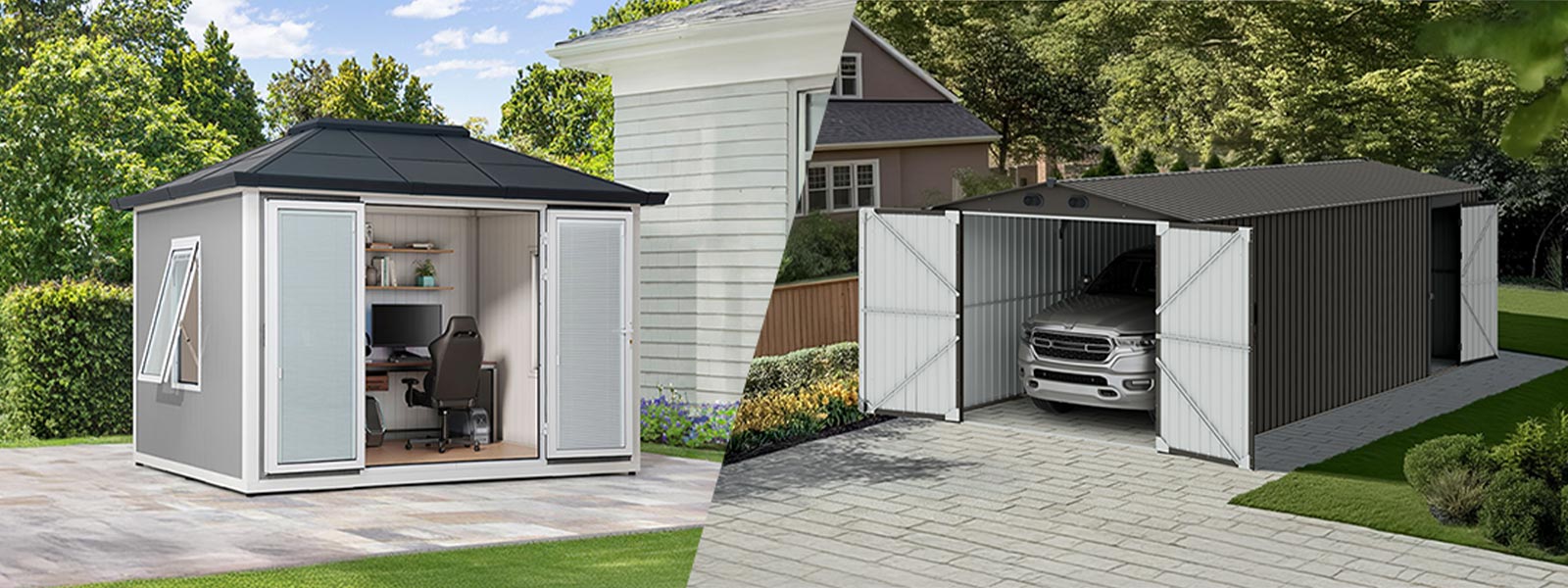
On-site Lessons and the Quiet Costs of Design Choices
I remember a rainy Thursday in May 2018 when a delivery of 12×16 vinyl prefab gable units arrived at our Seattle distribution yard; half the crews froze while we sorted warped panels (a vivid scene). Sheds were the center of that mess—our buyers, installers, and the weekend customers all felt the pinch. I watched a simple misalignment in prefab panels (42% of delivered units showed edge gaps) cascade into a week of rework—what practical change would have prevented that?

As someone with over 15 years in B2B supply chain for outdoor storage, I say this plainly: the usual checklist misses structural realities. We found that many suppliers prioritize cosmetic finish over fundamentals—foundation anchoring, correct floor joists sizing, ventilation and eaves placement—so the load-bearing details suffer. I once ordered a batch of treated floor joists for a Portland project (June 2020) that were undersized by two inches; the remediation cost us 3.4% of the project budget and a two-week delay. These are not abstract risks. (No sweat—these can be managed with the right comparative lens.)
What structural choices silently drive cost?
Technical Comparison: Where Large Shed Options Diverge — and What to Measure
When I compare options now, I map a short list of tangible metrics: foundation type, panel tolerances, anchoring method, and wind load ratings. For a large shed I recommend demanding supplier data on floor load capacity (lb/ft²), panel joint tolerances in millimeters, and a certified anchoring plan. I tested three designs at our Phoenix site in August 2021; one model—cheap but sleek—failed a simulated 80 mph gust test because its eaves and anchors were underspecified. I noted the exact failure: bolt shear at the anchoring plate, not the wall panels themselves—interesting, right?

Technically speaking, you should treat the decision as an engineering trade-off. Compare foundation options (concrete slab vs. concrete piers vs. treated timber sleepers) against site soil bearing and expected floor joist span. Check prefab panels for true flatness and factory-applied sealants; small gaps multiply when you stack inventory or add shelving. I interrupt myself here—brief aside—because installers often blame panels when the real culprit is improper anchoring; the truth sits in the connection details. Measure ventilation performance too: poor ventilation plus stored chemical inventory raises moisture risk by measurable percentages over a season.
Real-world impact
I prefer a side-by-side scoring sheet: three scenarios (high-turnover wholesale yard, long-term parts storage, and customer-facing retail display), then score each shed model on foundation compatibility, panel tolerance, anchoring system, and maintenance overhead. From there, weight the scores by frequency of use and potential downtime cost. In a Midwest retrofit last fall I changed the selected model after scoring—result: 22% faster install, and one fewer call-back for moisture intrusion.
To close: choose metrics you can verify (test certificates, installation photos with anchoring details, and a timeline for lead time). My three recommended evaluation metrics—structural connection integrity, verified panel tolerances, and installed ventilation effectiveness—will quickly separate robust options from ones that only look good on paper. Think like an engineer; shop like a buyer. For pragmatic suppliers and options, I trust the systems I can measure—and that is how I—and many wholesale buyers I work with—avoid needless disruption. Visit SUNJOY for tested models and documentation: SUNJOY.